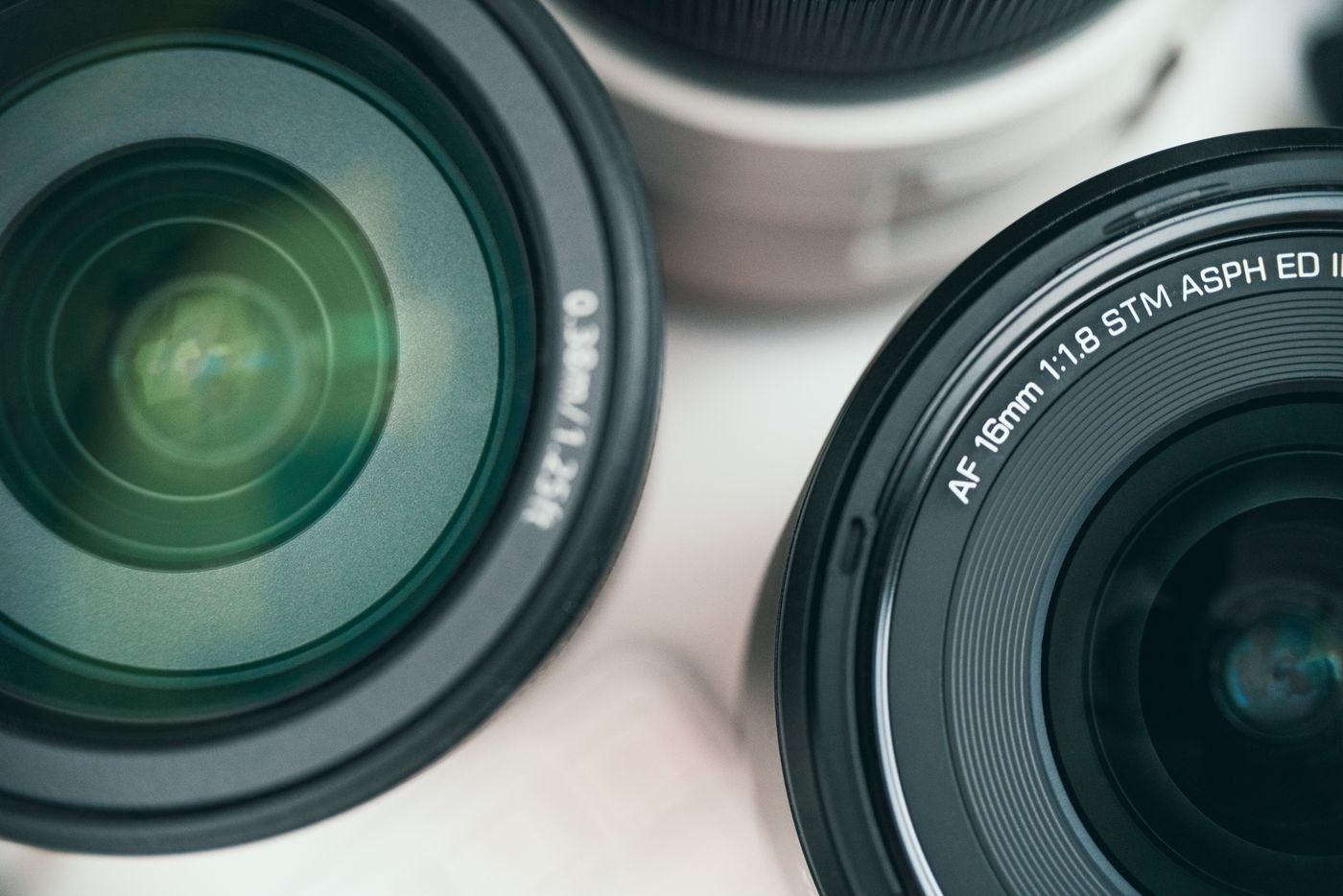
Confirm the exact mount, model and compatibility before discussing condition. Similar names can describe lenses with different mounts, autofocus requirements or electronic support. Check the manufacturer's information for your camera and lens combination. An adapter that physically connects two parts does not necessarily retain every function, and a low purchase price does not resolve an unsuitable combination.
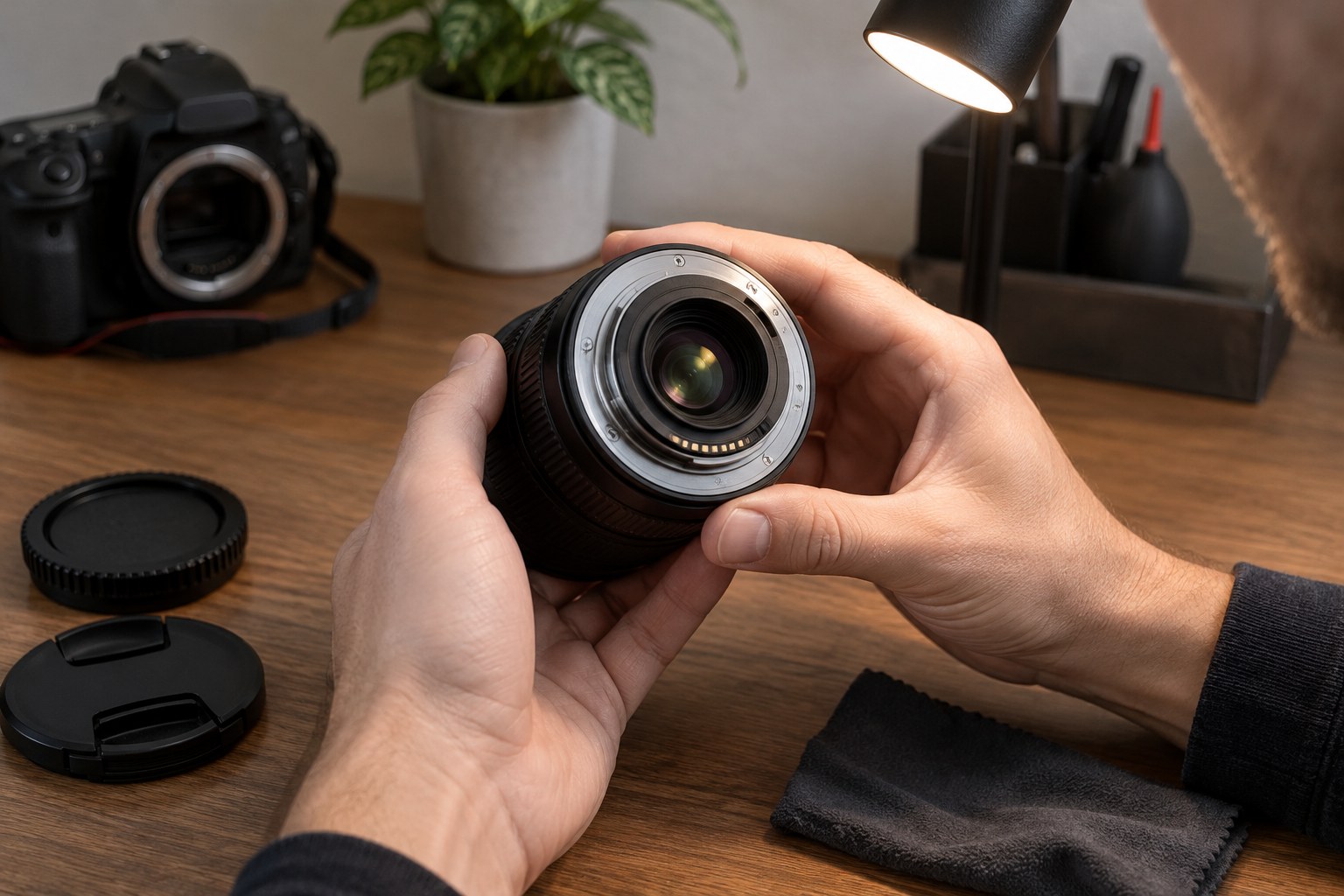
Inspect the exterior under ordinary bright light. Look for damaged filter threads, loose components, dents near the mount and signs that controls have been forced. Rotate focus and zoom rings through their usable range without forcing them beyond their stops. Smooth resistance is different from grinding, a sudden catch or a loose section that changes when the lens is tilted.
Test with photographs, not only a torch
Small internal dust particles do not automatically produce a visible defect. Haze, branching marks, scratches and unusual reflections deserve closer examination, but diagnosing their cause from a quick glance can be unreliable. If the condition is uncertain, seek an inspection by a repair professional rather than accepting a confident label from either seller or buyer.
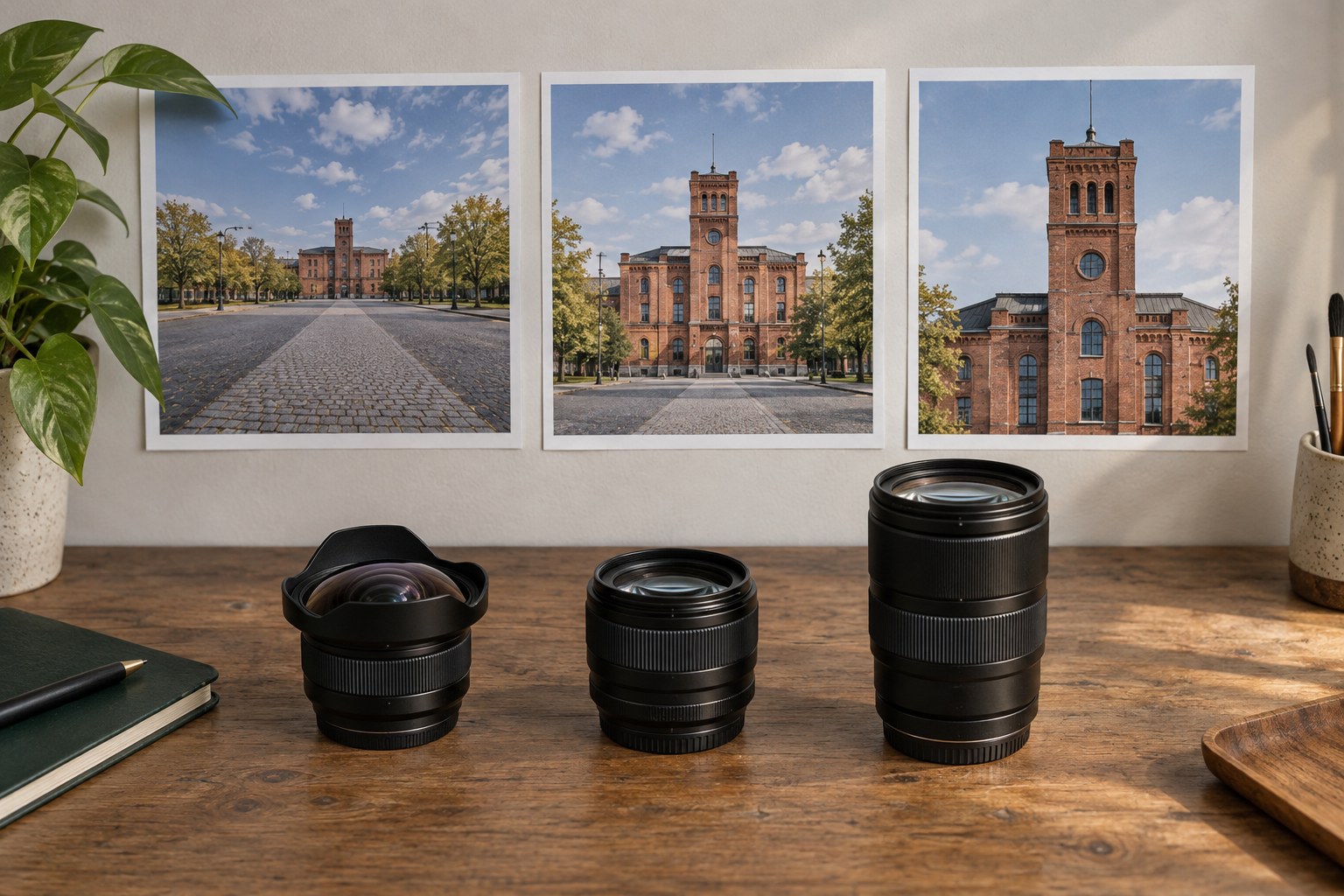
Mount the lens on a compatible camera and photograph a detailed subject at several apertures. Use a sufficiently fast shutter or firm support so camera movement does not imitate an optical problem. Check the centre and both sides of the frame. A flat subject should be photographed with the camera aligned carefully; otherwise an angled setup can make one side appear softer for reasons unrelated to the lens.
Test autofocus on near and distant subjects, then confirm manual focus operation. Try the actual functions you need, including stabilisation or an aperture ring where applicable. Listen for unexpected sounds but distinguish normal operation from a change you can reproduce. Review full files if possible, not only small rear-screen previews.
Ask what accessories are included and obtain the seller's stated condition and applicable return terms in writing. Do not assume that every private sale or shop purchase has the same protections. If you cannot test the lens, the uncertainty remains part of the decision. A useful inspection ends with specific observations such as a loose mount or uneven sharpness, rather than a vague declaration that the lens looks clean.