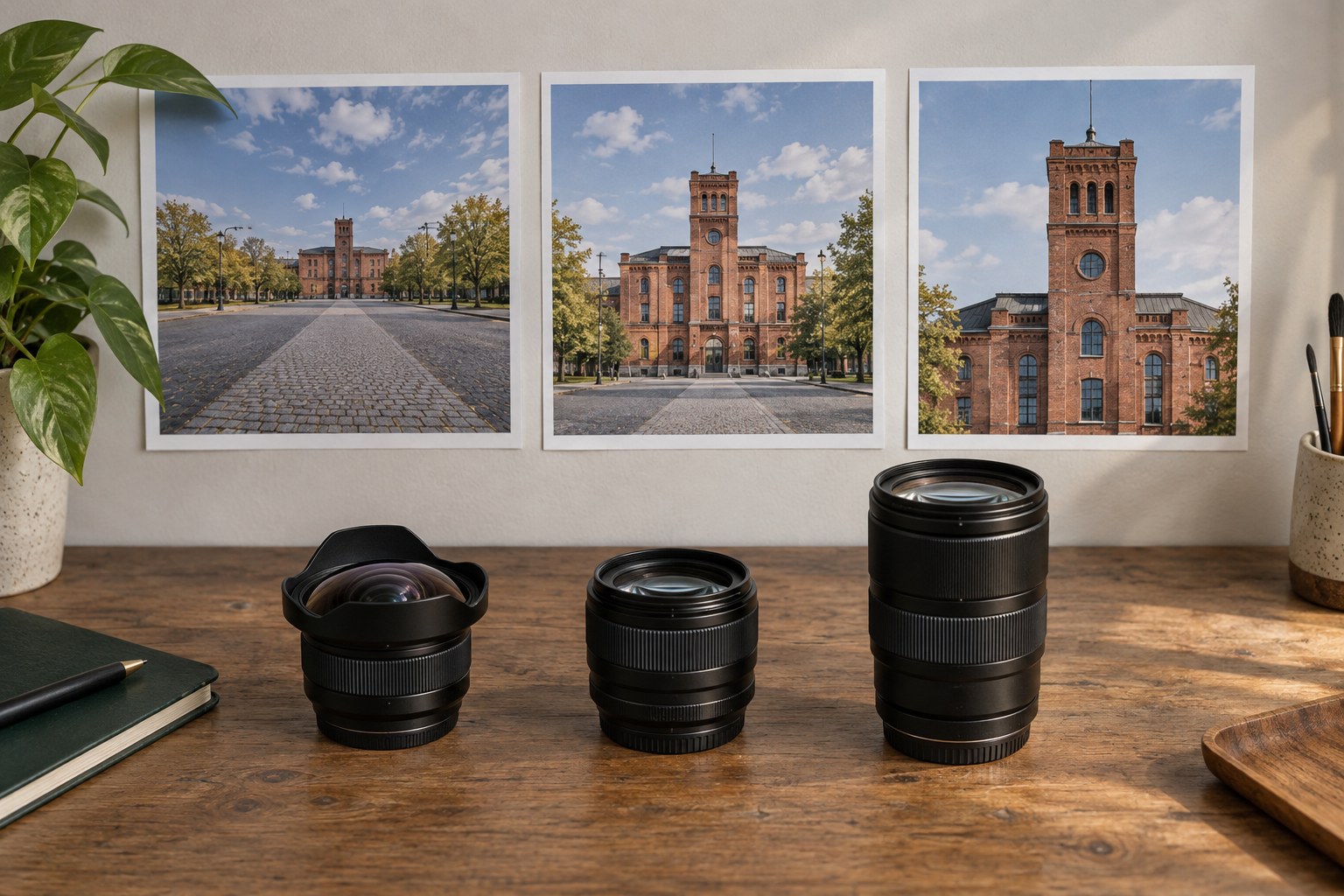
A first lens purchase is easier when it answers a repeated photographic problem. Wanting more background blur, a wider room view and a lighter walking kit are different needs. One lens may not solve all three. Before comparing specifications, review photographs you already make and write down where the current setup consistently gets in the way.
Separate an equipment limit from a technique or position problem. If people are blurred because the shutter is too slow, a lens with a wider maximum aperture might help, but so might a different exposure choice. If a room does not fit, a wider view may help, yet moving to another doorway could produce a more natural composition. Identify the unresolved limitation before spending money.
Use your existing photographs as evidence
If you have a zoom lens, inspect which focal lengths you use most often. That pattern is a starting point, not a rule: you may use one end frequently because the lens cannot go farther. Spend a short session keeping the zoom at one focal length to see whether a fixed lens in that range would feel comfortable. Do not judge only from a few favourite images.
Think about working distance. A lens that gives a tight portrait from across a room may be awkward in a small home. A wider lens used very close to a face changes the relative size of near and far features. Compare pictures made from realistic positions rather than relying only on field-of-view diagrams.
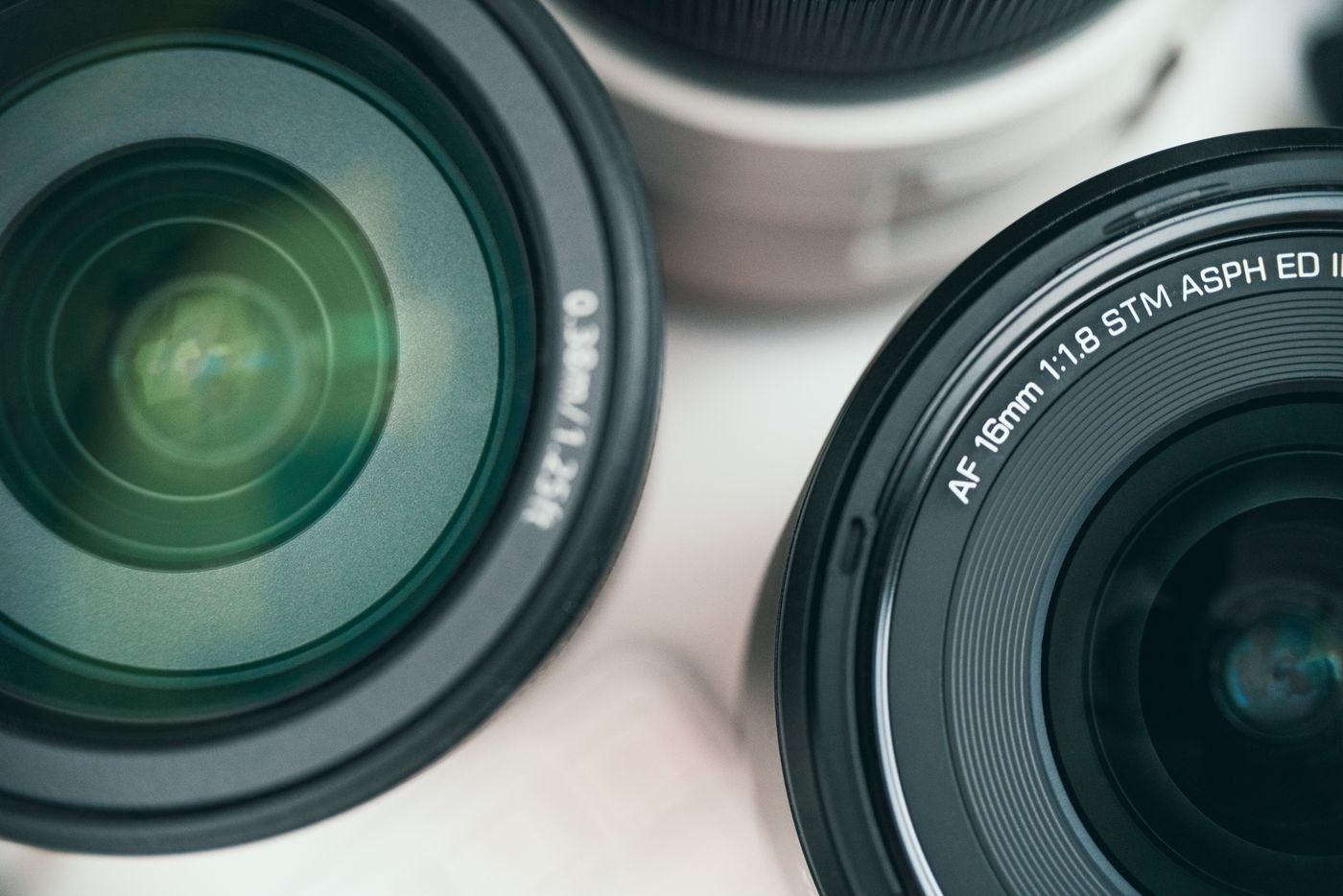
Consider close focusing if you photograph food, crafts or small objects. Focal length alone does not tell you how tightly a lens can frame a small subject. Check the minimum focusing distance and maximum reproduction ratio in the manufacturer's specifications, then confirm whether the working distance leaves room for light and for your hands.
Check compatibility and everyday handling
Confirm the exact camera mount, sensor coverage and any adapter requirements. A physically compatible lens may have limitations in autofocus, aperture control or stabilisation. Use the camera and lens manufacturers' compatibility information rather than assuming that a familiar brand name guarantees full operation. Include an adapter's size and weight in the handling decision.
Try carrying the likely camera-and-lens combination for the kind of outing you actually make. A lens that stays at home because it is cumbersome does not solve a walking-kit problem. Check whether it fits your bag, whether the hood is convenient and whether the controls are easy to reach. Filter size may matter if you already use filters, but it should not outweigh the lens's central purpose.
A wider maximum aperture can help in low light and reduce depth of field, but those benefits come with trade-offs. You may still need to stop down for groups or detailed objects, and a moving subject can demand a faster shutter even with stabilisation. Avoid treating one specification as a general measure of photographic capability.
Write a short purchase brief with one primary need and two constraints. For example: photograph small handmade objects indoors, keep enough distance to place light, and fit the existing camera without an adapter. That brief produces a more focused shortlist than a general search for the sharpest lens. Reject an option that fails the central requirement even if its other specifications are attractive.
Also consider what will remain unsolved after purchase. A lens with closer focusing does not provide a stable support or a suitable background. A wide aperture does not organise a group into a manageable depth. Including those remaining needs in the plan helps you avoid spending the whole budget on an optical change that addresses only one part of the photograph.
Where possible, borrow or rent a suitable type before buying, or test it in a shop with permission. Make the kinds of pictures you expect to use it for, not only a photograph of a distant shelf. Review the files at your normal output size and note what became easier. The useful choice is the lens that removes a clear constraint while fitting your working habits, even if another option has a longer feature list.