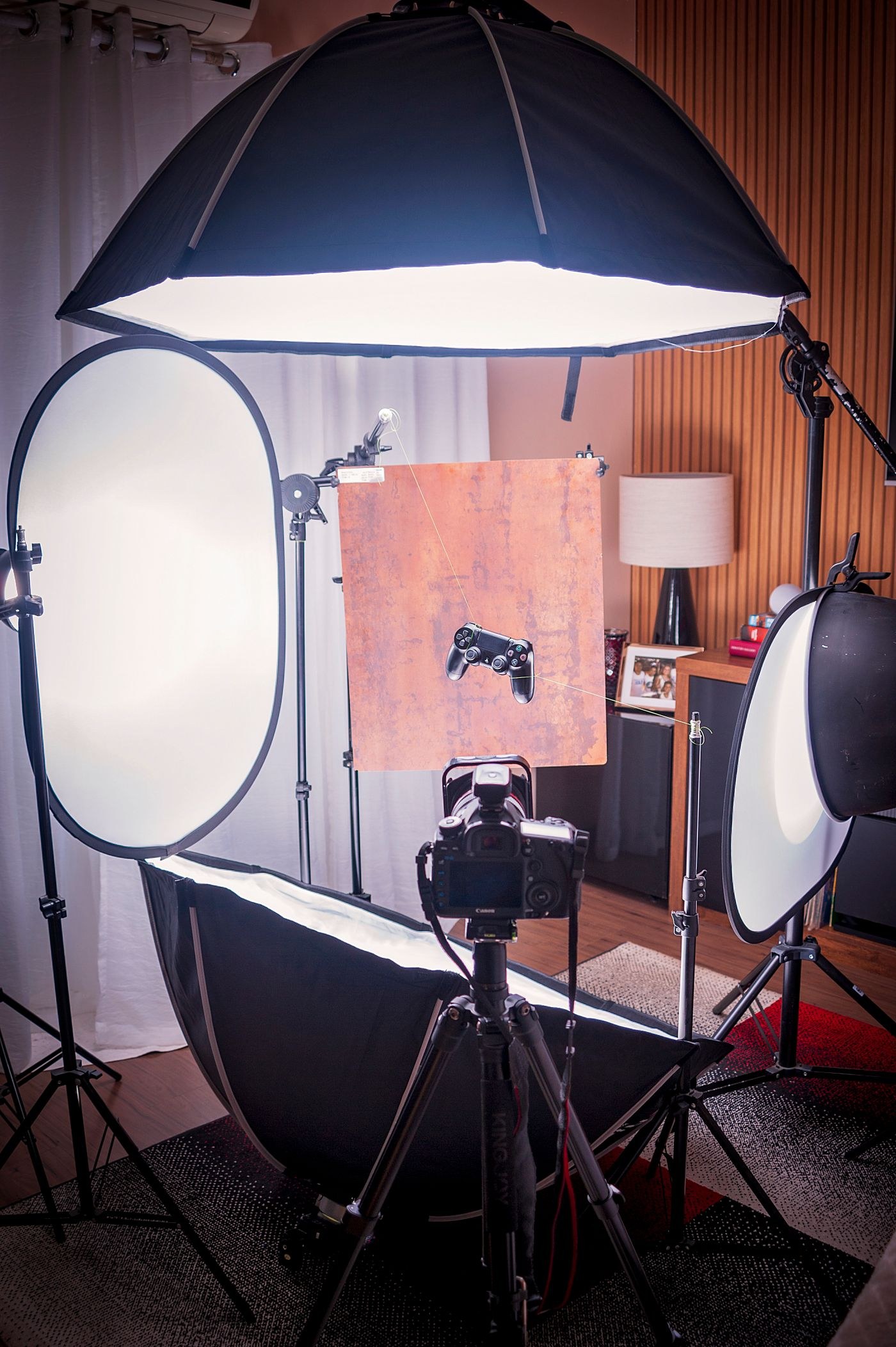
Place a textured object beside one lamp and look at its darker side. If that side simply needs a little more detail, a white reflector may be enough. It cannot create light independently: its effect depends on receiving illumination from the main source and sending some of it toward the subject. Turn the card slowly and bring it closer before deciding that it is too weak.
A second lamp becomes useful when you need light from a direction the reflector cannot reach, or when the fill needs independent adjustment. It may also create a second shadow, a new reflection and a colour mismatch. Those are manageable effects, but they are additional decisions. Switching on another lamp is not automatically a cleaner way to brighten a dark area.
Make a controlled comparison with the camera fixed. Photograph the object with only the main light, then with a white card, then with the second lamp. Keep the main light and exposure unchanged. Adjust the second lamp until the dark side has a similar brightness to the reflected version. Now compare shadow edges, surface reflections and colour, rather than being persuaded by whichever frame is brighter overall.
Let the material guide the choice
On matte fabric, fill light mainly changes tonal separation. On a glazed cup or polished tool, the reflector itself may appear as a broad pale shape. A second lamp can appear as a smaller bright point. Move each source while watching the reflection, not just the general brightness. A useful highlight describes a curve; an uncontrolled one hides a label or an important join.
A silver reflector can deliver stronger, more directional fill than a white surface, but may be less forgiving to position. Start with white when the goal is gentle shadow detail. Keep supports outside the composition and secure cards so they cannot fall onto the subject or lamp.
If both methods flatten the object, reduce the fill rather than changing the main light immediately. The shadow may be doing useful work. Keep one frame with a clear dark side as a reference while editing, because a bright screen can encourage you to remove every shadow. The decision is successful when the object remains dimensional and the necessary details are visible, not when both sides have identical brightness.