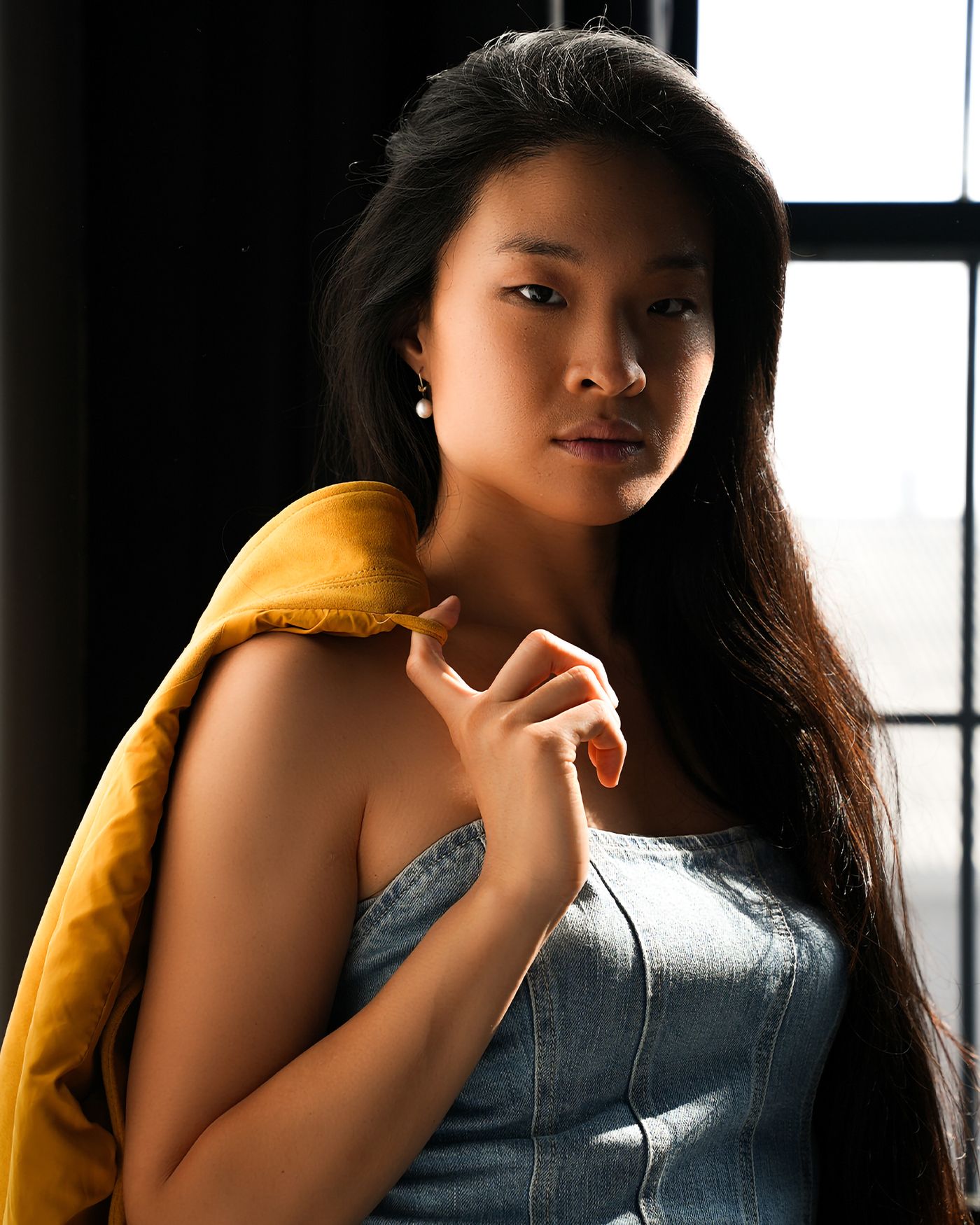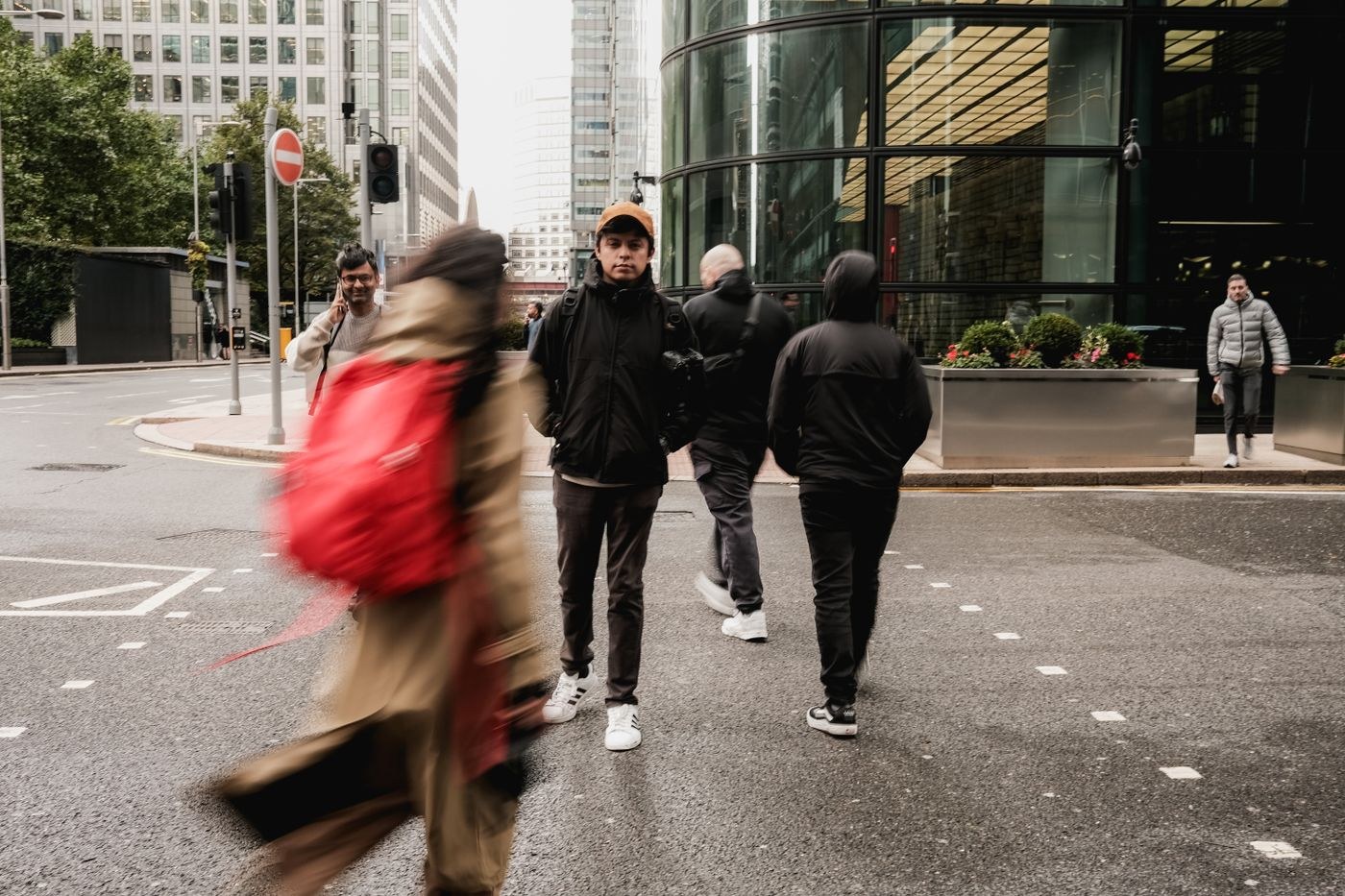
Photographing a face through leaves or the edge of a doorway can add depth, but the nearest object may attract autofocus before the camera finds the eye. Start by making an unobstructed portrait from the intended camera position. Establish exposure and the amount of face you want in focus, then introduce the foreground element without changing the subject's position.
Use a smaller autofocus area when a broad area repeatedly selects the foreground. Place it over the visible eye, or use eye detection and confirm that the box sits on the correct person. Detection is an aid, not proof that focus is right. A leaf crossing an eyelash can make the result look soft even when the eye itself lies in the focus plane.
Create a clear route to the eye
Move the camera a few centimetres sideways and watch the overlap. You usually need only a small opening, not an entirely empty frame. Keep the important eye, nose edge and mouth readable unless concealment is part of the intended picture. Foreground shapes are most convincing when they frame or partly veil the person rather than cutting randomly across the expression.
A foreground object close to the lens can become a broad wash of colour at a wide aperture. Check the actual photograph rather than assuming the viewfinder preview shows the final effect. The blur can lower contrast across the face or introduce a bright patch that looks like flare. Increase the distance between that object and the lens, change aperture or move the object if the face loses too much definition.
If autofocus continues to jump, focus manually with magnification while the person holds position. Take care when either of you moves afterwards: at close range and a wide aperture, a small forward movement can shift the eye out of focus. A short sequence is useful for expression, but it does not replace checking a magnified frame before continuing.
Review the image once at full view and once enlarged. The enlarged view answers whether the eye is sharp; the full view answers whether the foreground contributes anything. Remove it for a comparison frame. If the simpler portrait communicates the expression more clearly, the additional layer may be unnecessary even though the focusing challenge was successfully solved.