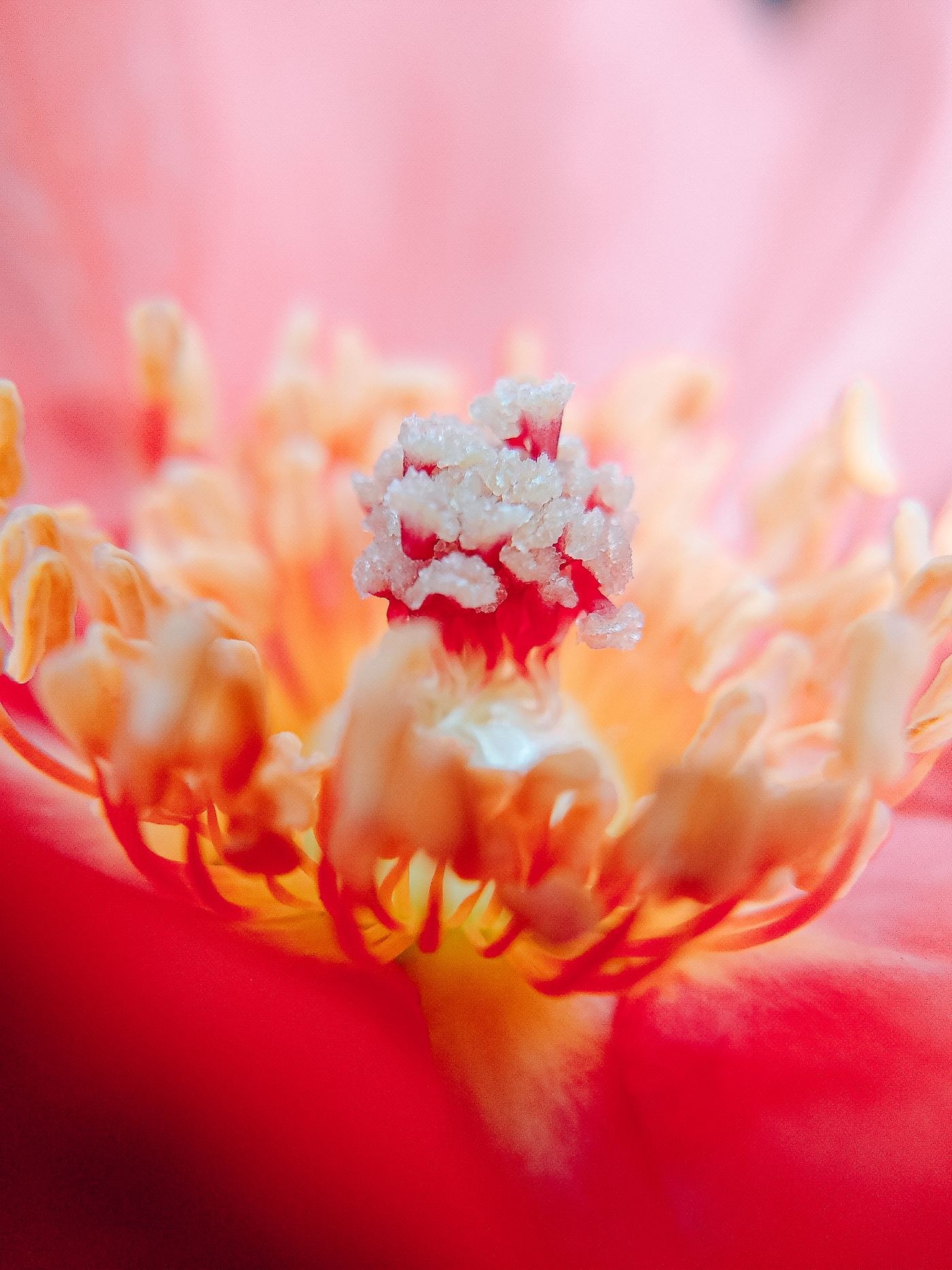
At close distance, a flower can extend through more depth than the camera records sharply. A petal tip may be crisp while the centre is soft, or the centre may be clear while a nearer petal becomes a large blur. Decide which detail carries the picture before choosing the aperture. Trying to make everything equally sharp is not always necessary or possible in one frame.
Look at the flower from several angles. A more side-on or frontal view may place the important petals closer to one focus plane. This can improve useful sharpness without requiring a very small aperture. Watch the background at the same time: moving a few centimetres can replace a bright distracting patch with a quieter area.
Separate depth from movement
Use a precise focus point or manual focus with magnification on the chosen detail. At close range, leaning forward after focusing can move the plane of focus away from it. Support the camera when practical and keep your body position stable. If you focus by moving the whole camera slightly, release the shutter when the intended detail becomes clear rather than after another unplanned movement.
A narrower aperture increases depth of field but also requires more light, a longer exposure or higher ISO. Very small apertures can reduce fine detail through diffraction. Make a short comparison at two or three sensible apertures, keeping exposure brightness similar, and examine the result at the intended size. The best compromise is specific to the flower's shape and your composition.
Watch for wind. A tripod steadies the camera but does not stop a stem moving. Wait for a lull or choose a faster shutter speed; do not assume that a long exposure is harmless because the camera is supported. Avoid damaging or restraining a living plant merely to obtain a perfectly still subject. A sheltered flower or a different time can be a better solution.
For a flower with a deep trumpet and a forward-projecting rim, make two deliberate focus choices: the rim and the interior. The rim-focused image may describe shape, while the interior-focused image may direct attention to colour or detail inside. Neither is automatically a failed version of the other. Compare them at normal size before attempting to combine every sharp area.
If using additional light, watch for a new problem rather than only the shorter shutter it permits. A small flash or lamp can create hard glossy patches on petals and a much darker background. Move or soften the light if that conflicts with the intended appearance. Keep equipment clear of delicate stems and do not let the lighting setup determine the composition before you have chosen the important detail.
Focus stacking can extend sharpness in a stationary flower, but it is not an automatic answer outdoors. Petals shifting between frames may produce broken edges and repeated textures. If you attempt a stack, keep framing and exposure consistent and make small focus changes through the needed depth. Inspect the merged edges closely, especially where a near petal overlaps a distant one.
For a single frame, let the blur support the chosen detail. A soft outer petal can lead into a sharp centre, while a huge bright blur across that centre can obscure it. Reposition rather than relying on sharpening to restore detail that was never focused. Sharpening increases local edge contrast; it does not move the focus plane.
Review one image at full view and another at magnification. The close view confirms technical detail, but the full view reveals whether the flower still reads as a coherent shape. Keep the photograph where selective sharpness guides attention, rather than the one with the largest amount of detail but the least convincing composition.