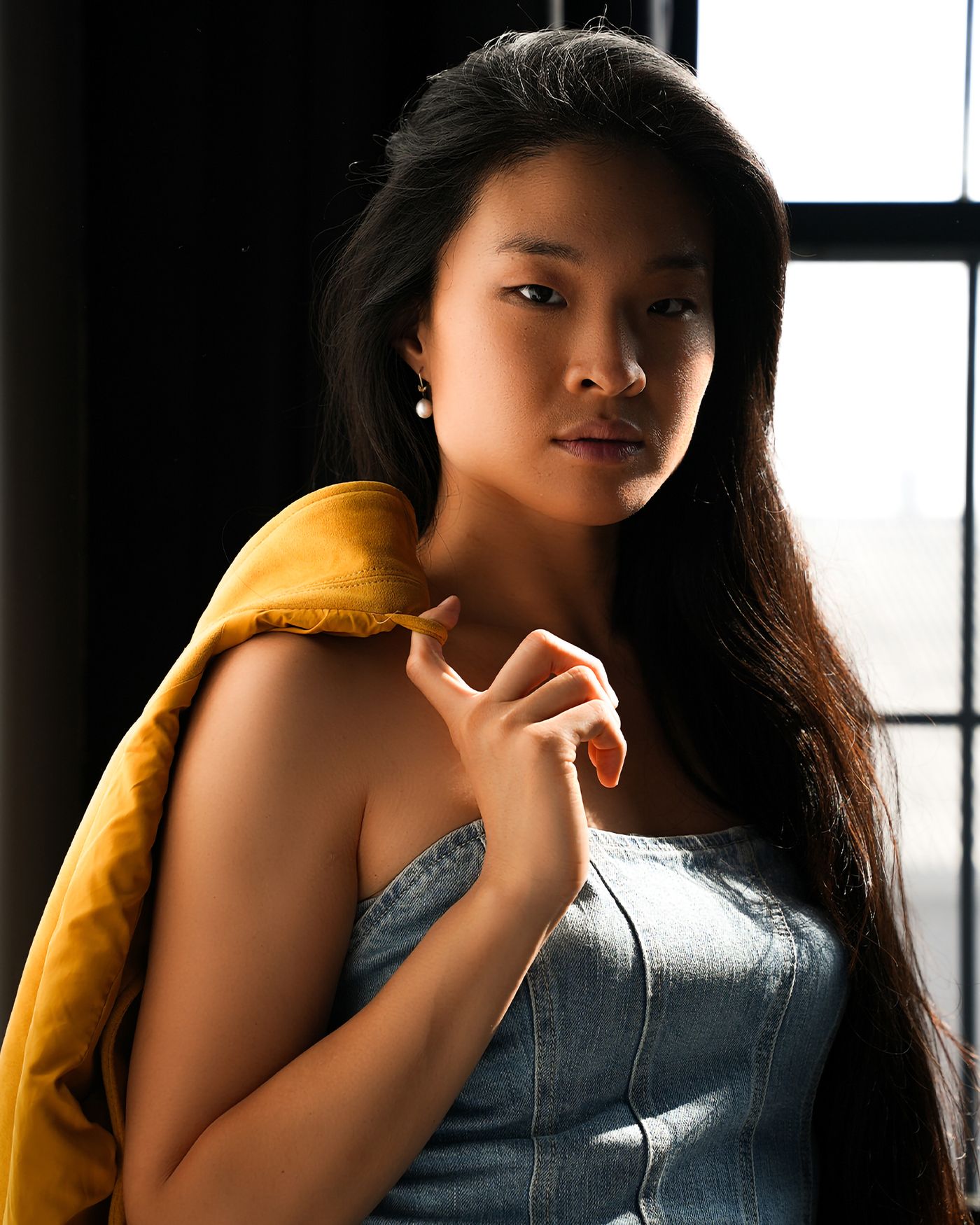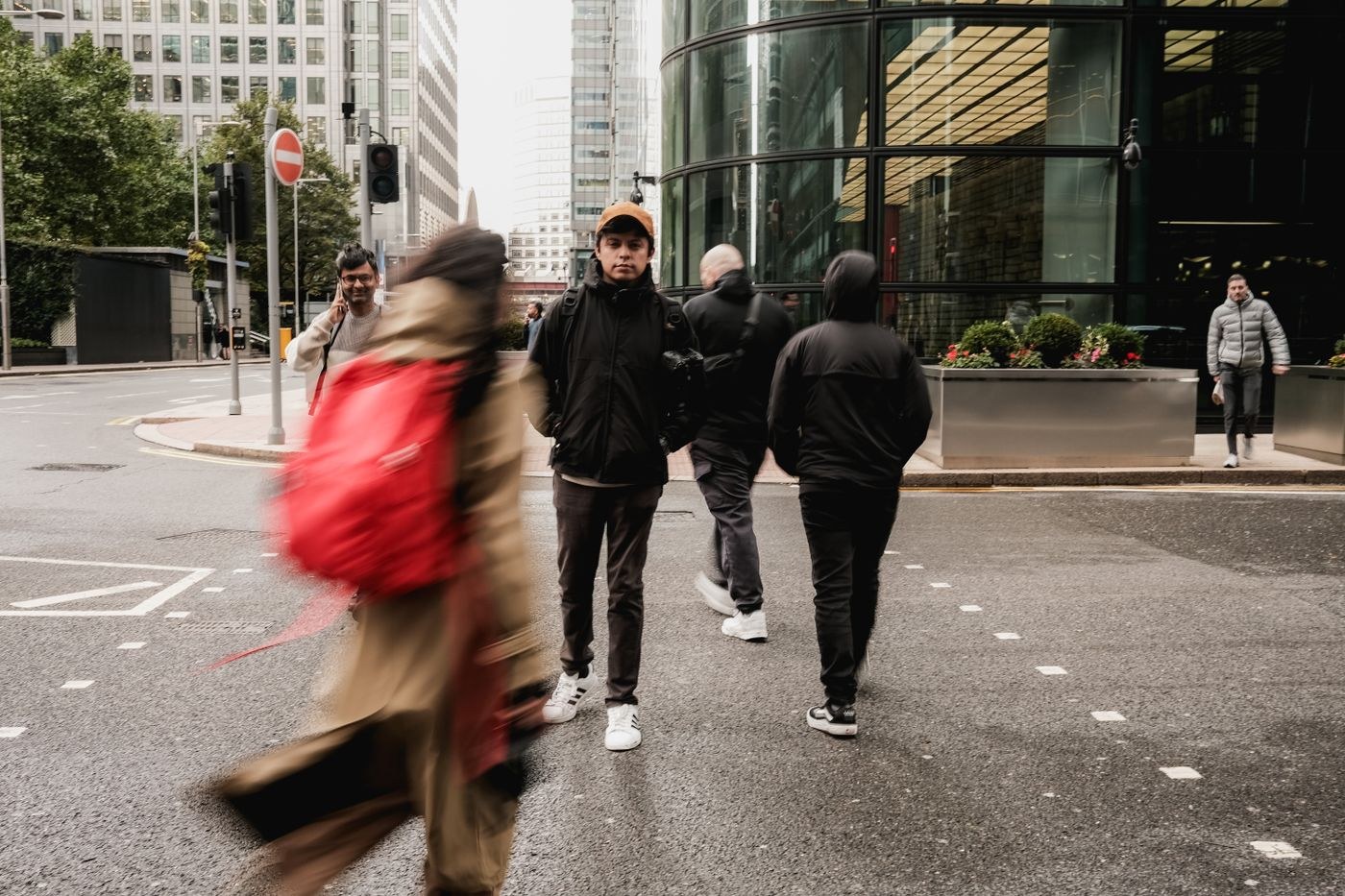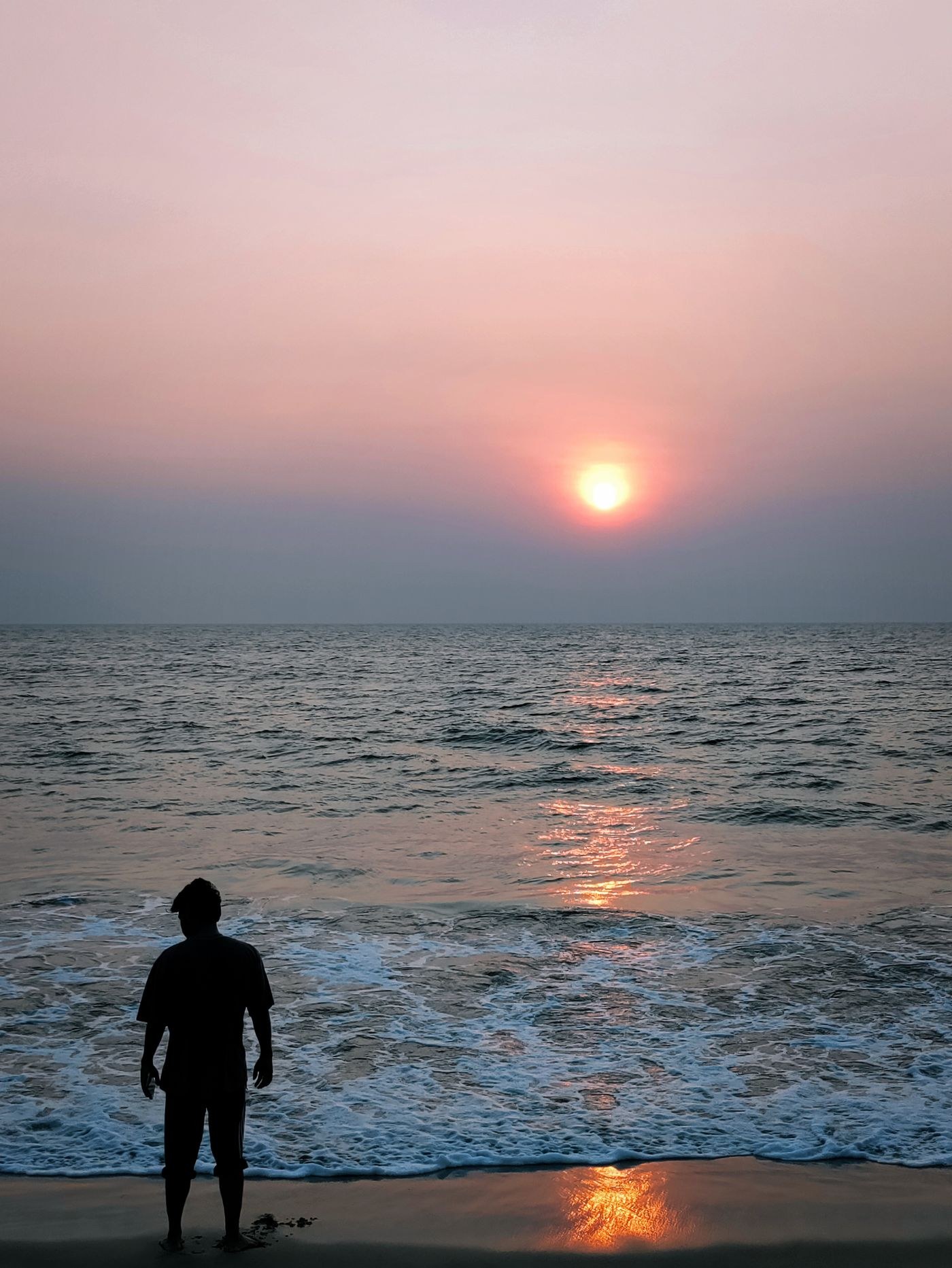
A silhouette depends on an outline that survives without internal detail. A person standing with both arms against their body may merge into a narrow block, while a slight separation between arm and waist makes the pose readable. Find that shape before worrying about a dramatic sky. Trees, railings and other dark objects can join the outline and make it difficult to understand.
Place the subject against a brighter section of sky, then move until the important edges are clear. Lowering the camera can lift a head above the horizon; moving sideways can separate legs from a post. Do not look directly at the sun through an optical viewfinder or point a long lens at it for extended periods. You can make a sunset silhouette with the sun outside the frame.
Expose for the part you want to keep
Take a test frame that preserves colour and cloud detail in the bright background. The subject should become dark as a consequence of that choice. Automatic face detection or metering may try to brighten it, so check the result and apply an appropriate exposure adjustment. Manual settings can keep the brightness consistent while you reframe, provided the light itself remains stable.
Focus on the subject's edge rather than the distant clouds if the person is meant to have a crisp outline. Choose enough depth of field for the relevant parts of the pose. A sharp background with a soft head can look accidental even when the tonal separation is strong. For a moving person, keep shutter speed short enough to describe the gesture or deliberately allow a small amount of motion.
Wait for a clear gesture instead of relying on a long indiscriminate burst. A bent elbow, separated feet or a profile with visible nose and chin can communicate more than a front-facing shape. If photographing someone you know, explain the desired position and let them move into it naturally. Avoid asking them to balance on a risky edge simply to clear the horizon.
In editing, deepen the silhouette only as far as the picture needs. Some shadow detail may give useful context, and a dark subject does not have to become featureless black. Check the sky for abrupt colour bands after strong adjustments. Keep the final image believable to its own lighting, with the outline doing the descriptive work that facial or surface detail would normally perform.