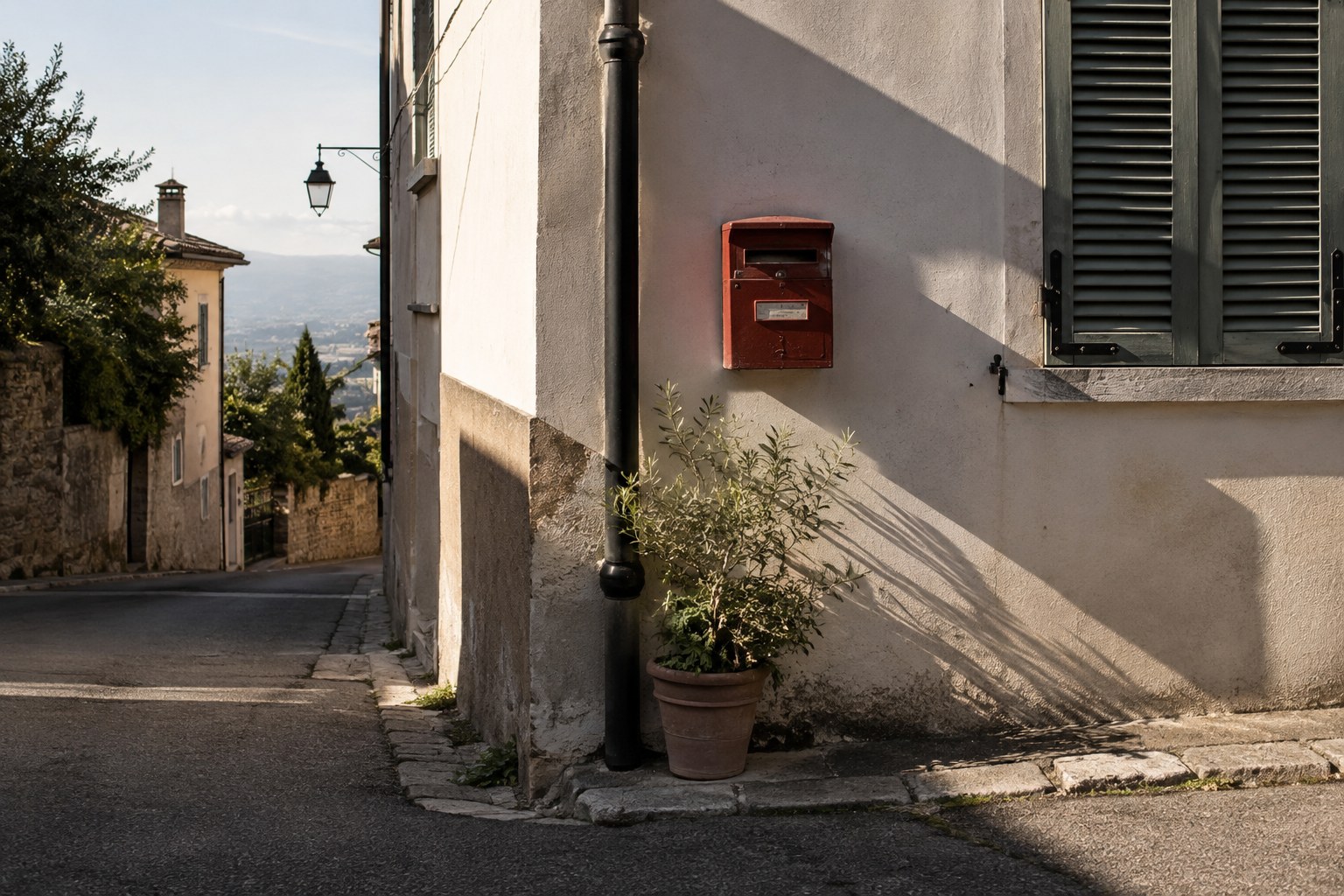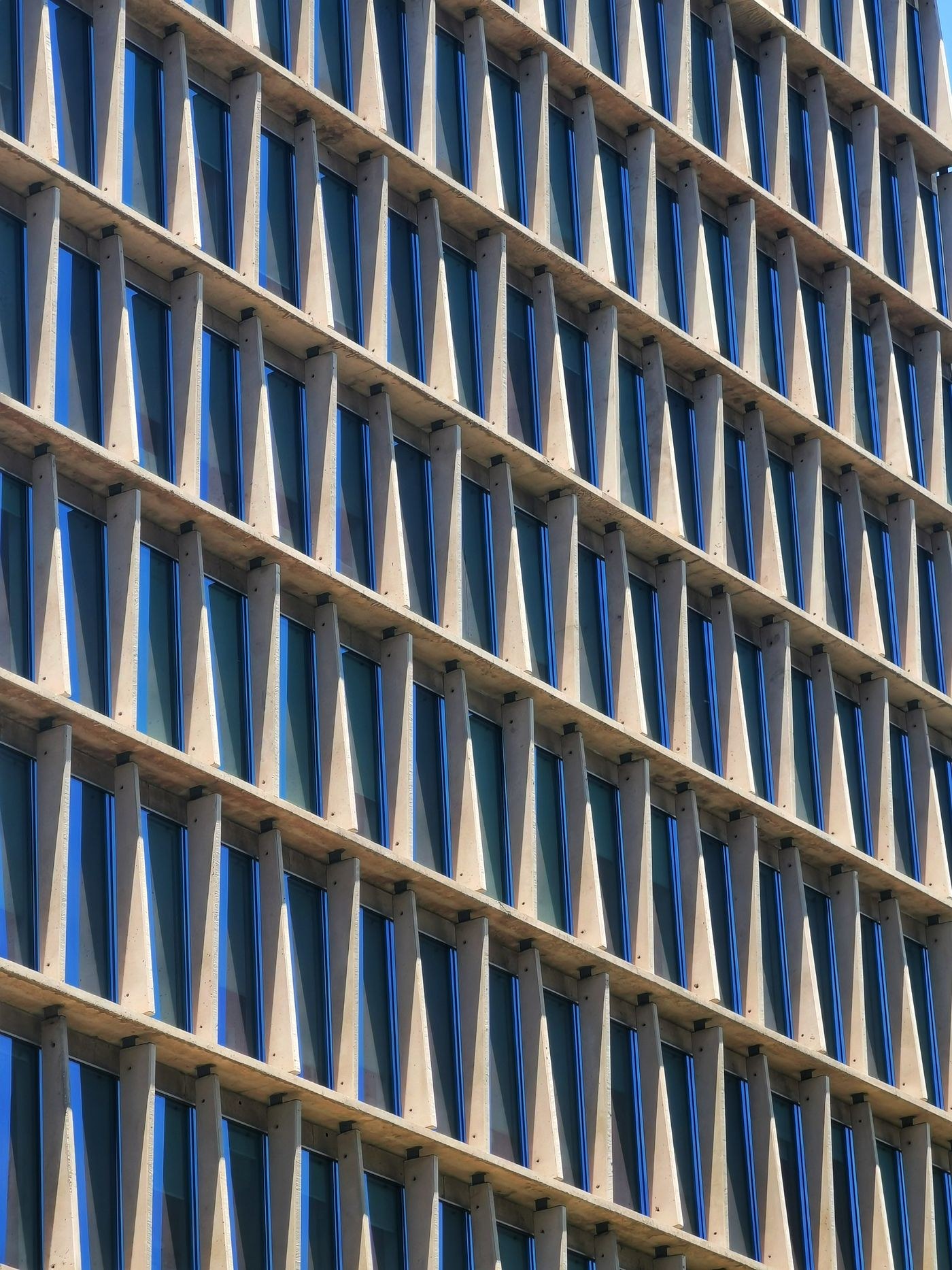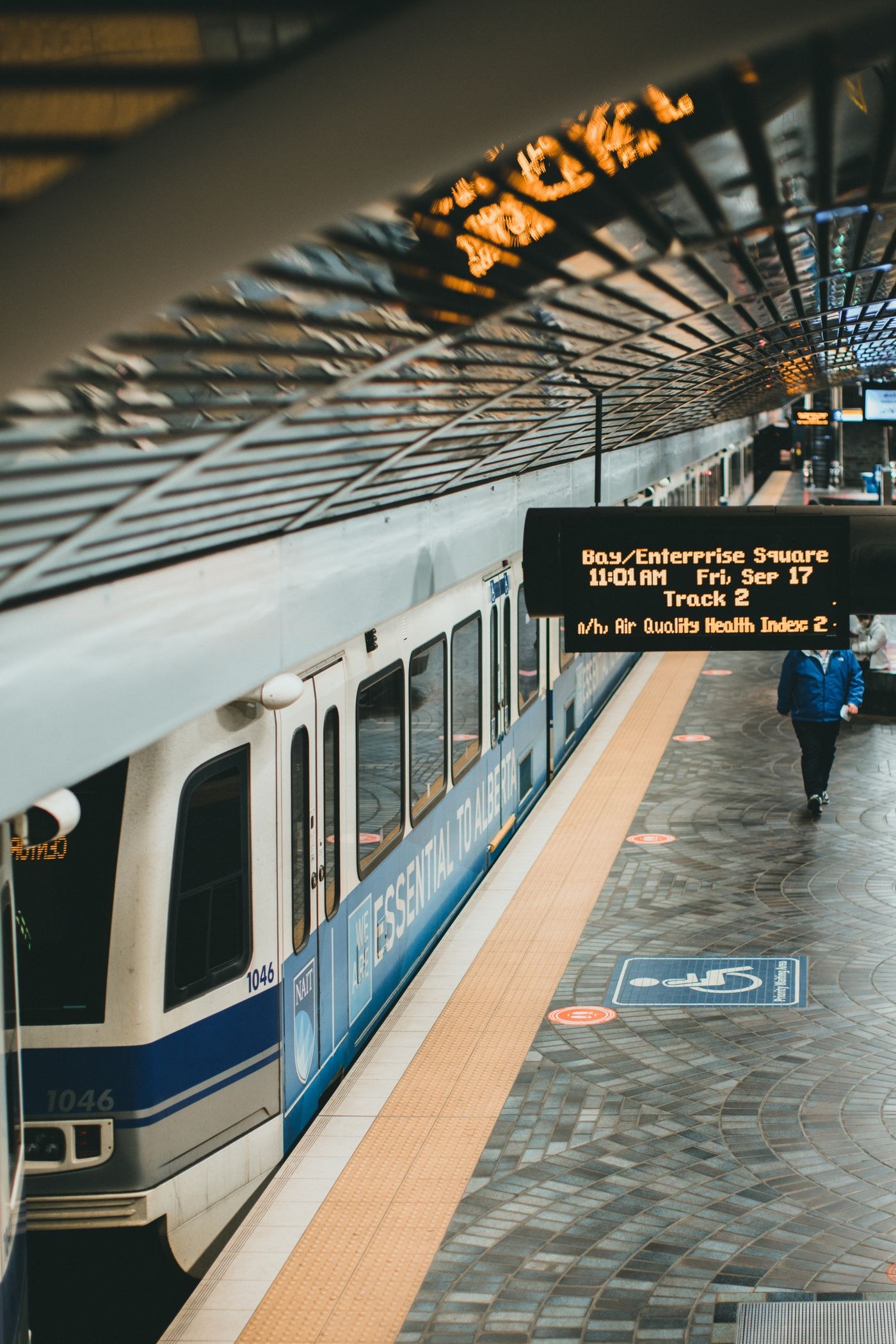
Before raising the camera, understand the circulation around you. Entrances, departure boards and platform access points can become crowded quickly. Stand outside those routes and follow the station's posted photography and access rules. A ticket or public entrance does not mean that every area or kind of equipment use is permitted. If staff give instructions, follow them and find another composition.
A station offers several subjects besides trains: repeated roof supports, light falling through a high window, a timetable reflected in glass, or the contrast between a still bench and passing travellers. Choose one rather than attempting to record the entire building at once. A fixed subject gives you time to arrange the frame before a moving element appears.
Prepare the frame before the moment
Check the background and the edges while the space is relatively clear. Determine where a person or train would need to be to complete the image. For a walking figure, preserve a distinct outline against a plain area rather than a busy sign. If movement is meant to blur, stabilise the camera appropriately and test the stationary architecture for sharpness. Do not place supports where they create an obstacle.
Light can change abruptly between an open platform and an enclosed hall. Review exposure after moving, particularly if a bright roof opening dominates the meter reading. A face or dark train may need a different treatment from the overall architecture. Keep bright electronic signs from becoming the only visually dominant part of the frame unless the sign itself is your subject.
Make a small number of frames, then lower the camera and check your surroundings again. Avoid stepping backward while looking through the viewfinder. Remain well behind platform boundaries and never enter track areas for a viewpoint. No composition depends on being close to an operational edge; longer framing from a safe position can often isolate the same pattern.
If the station is too busy, photograph details from an unobstructive position or return at a quieter permitted time. You do not need a completely empty building to make an orderly photograph, but you do need space to work without interfering with passengers. End the session with a wider contextual image if the earlier frames are very abstract. Together, a structural detail and a clear view of the hall can describe the place without turning the visit into a race for passing trains.