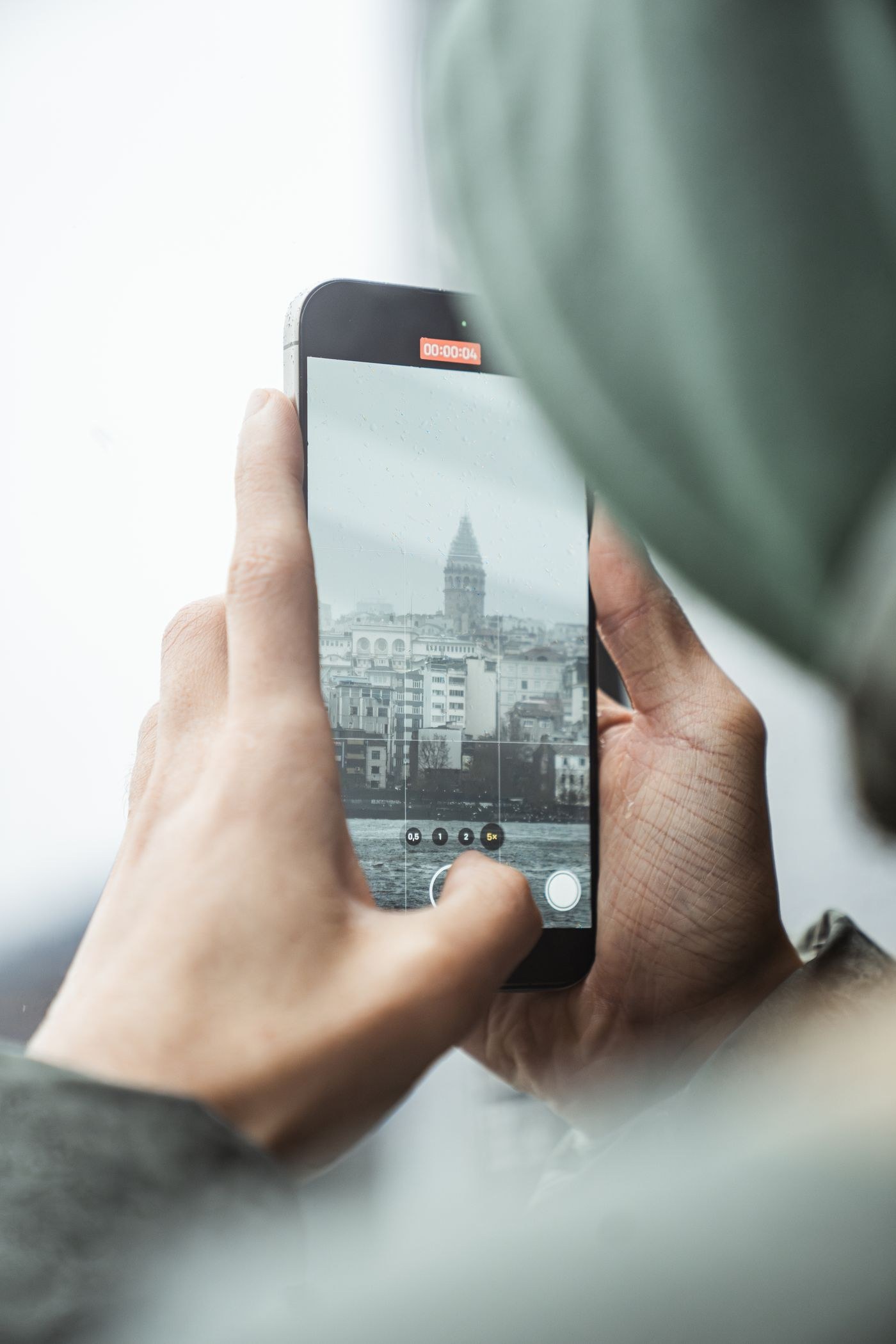
Clean the camera cover before starting, using a suitable soft cloth. Fingerprints can turn bright lights into haze and reduce contrast across the image. Open the camera and check which lens or view is active. Phones differ in how they switch between physical cameras and digital crops, so inspect the result instead of assuming every zoom position provides the same detail.
Begin with the main camera view when light is limited, then test alternatives if the composition needs them. Move to improve the relationship between subject and background where it is safe to do so. A digital enlargement cannot restore detail that was never recorded, and moving closer changes perspective rather than simply reproducing a longer focal length.
Control the important part of the frame
Tap the subject area to set focus where your phone allows it, and adjust brightness if a bright sky or window is misleading the automatic exposure. Check whether the adjustment remains active for the next photograph. Interfaces vary, and a focus or exposure lock can be helpful in one sequence but troublesome if forgotten after moving to a different scene.
Hold the phone steadily with both hands when possible, keeping fingers away from all lenses. For low-light modes that combine several frames, remain still for the indicated capture period and consider whether the subject is moving. A night mode may improve a static building while producing odd detail in a passing person. Make an ordinary exposure as a comparison when the result matters.
Compose with the intended final shape in mind. Leave a little space for straightening a horizon, but avoid recording everything loosely with the expectation of a large crop. Check edges for partial objects and accidental fingers. A clean arrangement does more for a travel photograph than an aggressive filter applied afterward.
Back up the original files during the trip when you have a suitable connection and verified storage plan. A messaging app may resize shared copies, so do not treat a sent image as the only archive. Review a small selection at the end of each day and note what is missing from the story. The phone's availability is useful when it leads to deliberate observations, not merely a larger number of unexamined pictures.