Wet-weather preparation begins with the limits of the actual equipment. Weather resistance is not a universal promise of waterproofing, and protection can depend on the camera, lens and their connection. Read the manufacturer's guidance for the combination you use. If the limits are unclear, avoid exposing it directly and plan photographs from shelter.
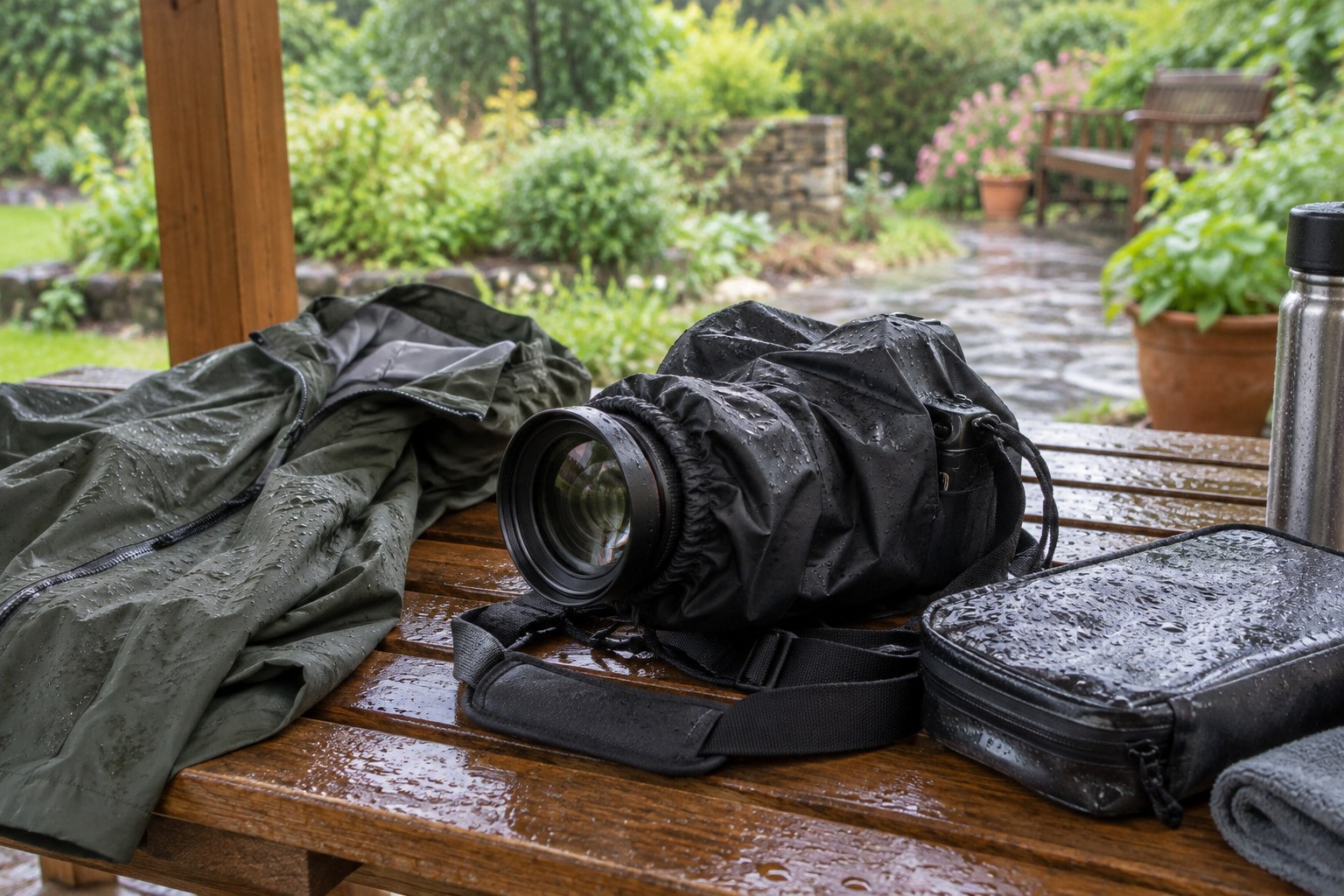
Pack a suitable cover where you can reach it quickly. A cover buried beneath lenses is of little use when rain starts. Check in dry conditions that it leaves access to the controls you need and does not pull on the lens or block the view. Keep the bag closed while working and protect spare equipment separately.
Carry a clean absorbent cloth for the outside of the equipment and a separate lens-cleaning cloth. Do not use a wet, gritty cloth on optical surfaces. A lens hood may reduce drops reaching the front element, but it is not a rain seal. Inspect the front surface between photographs, because one large drop can create a soft patch across an otherwise clear image.
Avoid changing lenses, cards or batteries in direct rain. Move to a genuinely dry place first and dry the exterior around the opening before accessing it. Keep wet items away from unused equipment in the bag. A separate pouch or compartment can prevent a damp cover from transferring moisture to everything else.
Work from stable ground and keep attention on the surroundings. Slippery paving, water near steps and passing traffic matter more than securing one extra frame. Do not place a bag where runoff collects. If the weather becomes more severe than the protection can reasonably handle, stop rather than treating the cover as unlimited permission to continue.
When returning indoors from cold conditions, consider condensation. A sealed bag around the cold equipment before entering a warmer humid space can help keep moisture on the bag while the gear warms gradually. Follow the manufacturer's guidance and allow time before opening compartments. Do not force-dry the camera with strong heat.
At the end of the session, remove damp covers and let the bag and accessories dry separately in a suitable indoor place. Inspect straps, seams and caps for trapped moisture. If water has entered the equipment or operation becomes abnormal, stop using it and seek the manufacturer's service guidance. Preparation is complete only when the kit is dry and ready for the next outing.