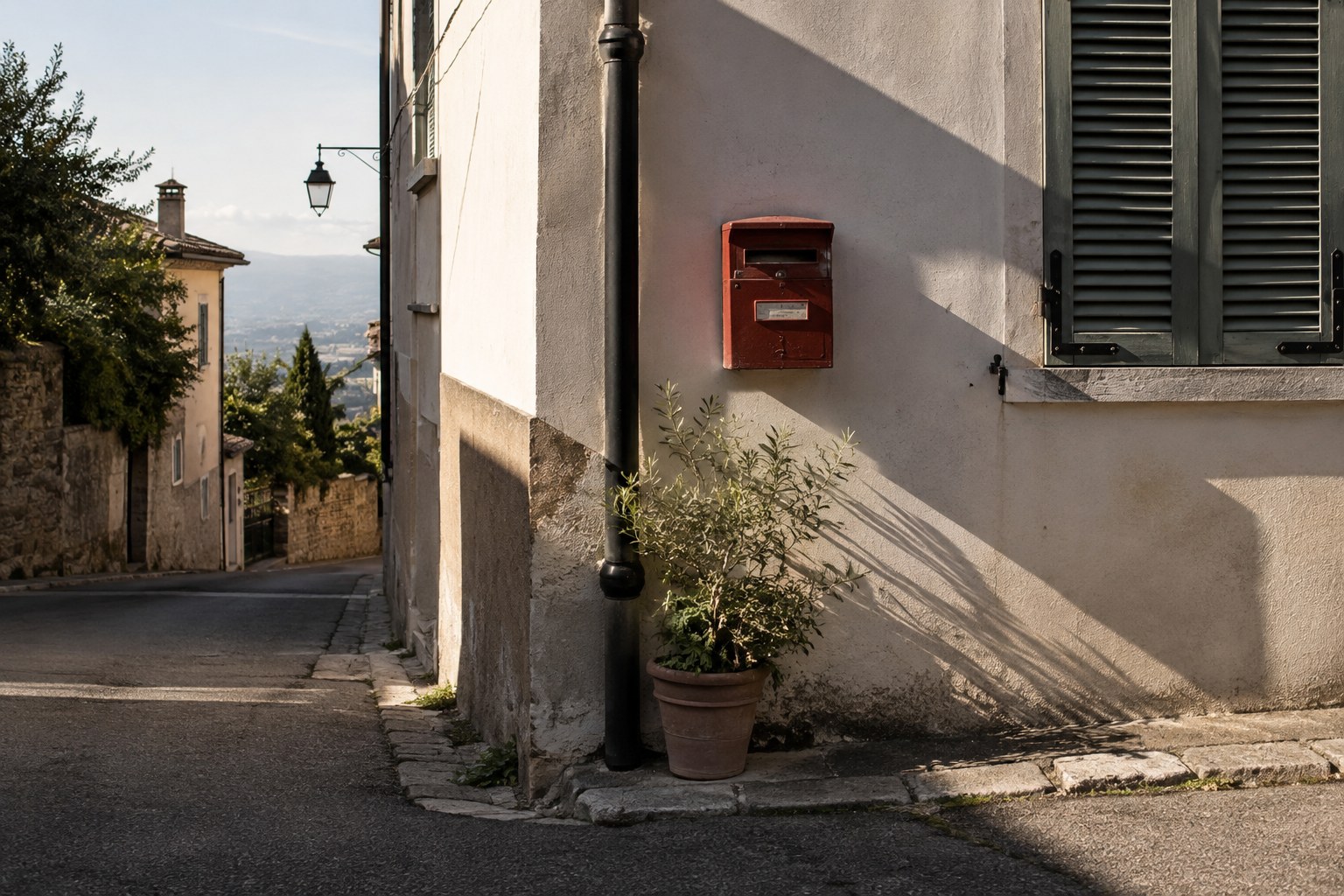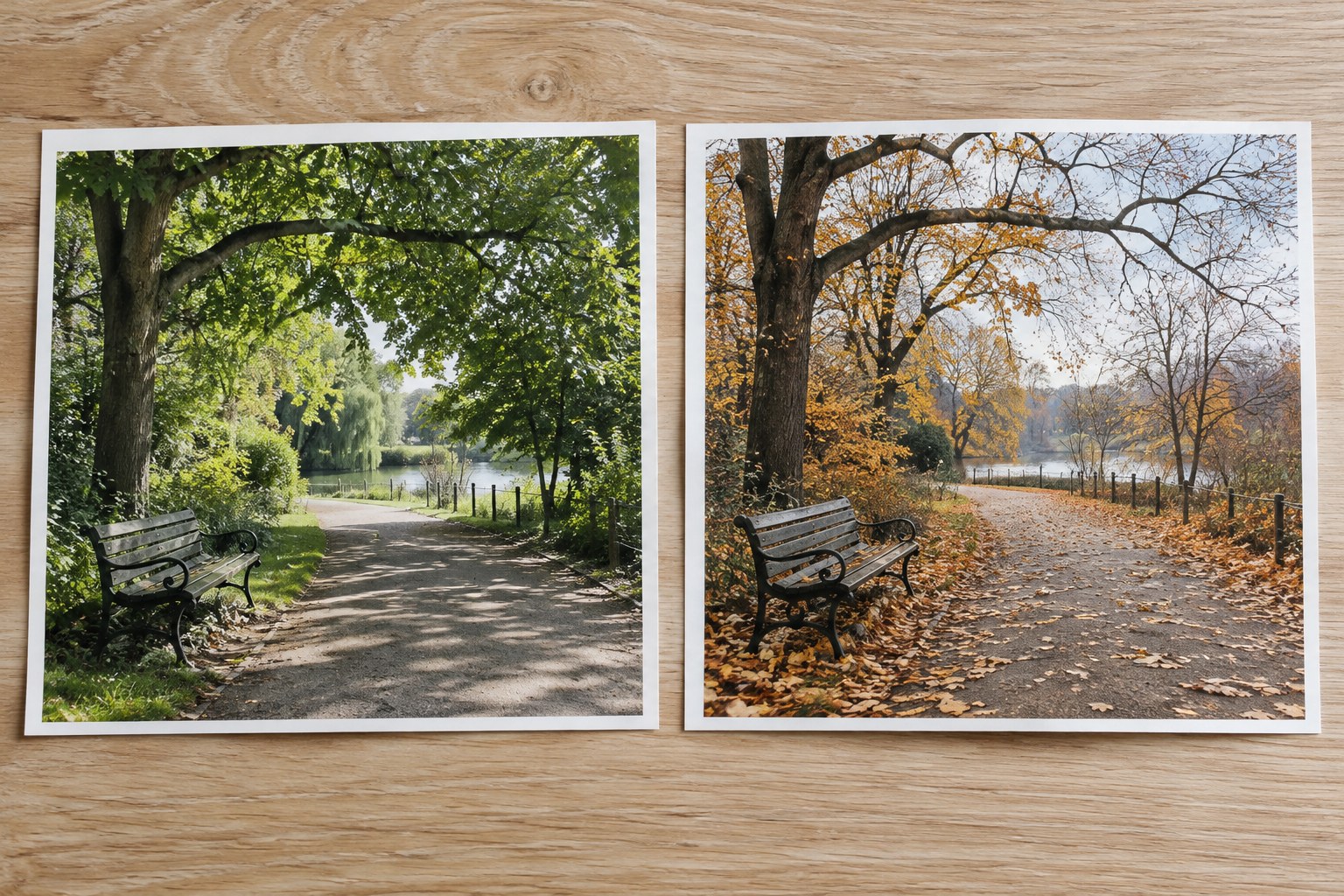
Choose a location you can revisit without unusual access arrangements. A tree beside a path, a garden corner or a view across a small square can work better than a spectacular place you rarely reach. The subject should contain something stable and something likely to change. A fixed wall beside vegetation gives the eye a reference for growth, light and weather.
Record the viewpoint after the first photograph. Note camera height, focal length and where you stood relative to permanent features. A reference image of the setup can help, but avoid relying on a temporary mark or movable object. Keep the original uncropped file so you can compare framing accurately on later visits.
Decide what stays consistent
For a direct comparison, maintain roughly the same camera position and field of view. Exposure and white balance may need to change because the light is different; identical settings do not guarantee comparable images. Aim for a consistent interpretation of brightness rather than forcing every scene through the first day's exposure.
Visit at a similar time of day if the purpose is to compare vegetation rather than changing sun direction. Even then, the sun's position varies across the year. Record the conditions so you can distinguish a seasonal difference from an unusually cloudy afternoon. A short note about wind, leaf state and recent rain is more useful than guessing later from the date alone.
Take the repeat photograph first, then make a second image responding freely to the visit. Snow may reveal a shape outside the established frame, or summer growth may block the original view. Keeping a comparison frame and an observational frame lets the project remain consistent without ignoring what the place offers.
When assembling the series, align and crop modestly rather than distorting each image to match perfectly. Preserve meaningful changes, including a branch that has disappeared or a new object in the scene. If access or the landscape changes enough that the original viewpoint is no longer possible, document that interruption instead of manufacturing a seamless sequence. The value of the project lies in a clear record of change, not in making every season appear equally picturesque.