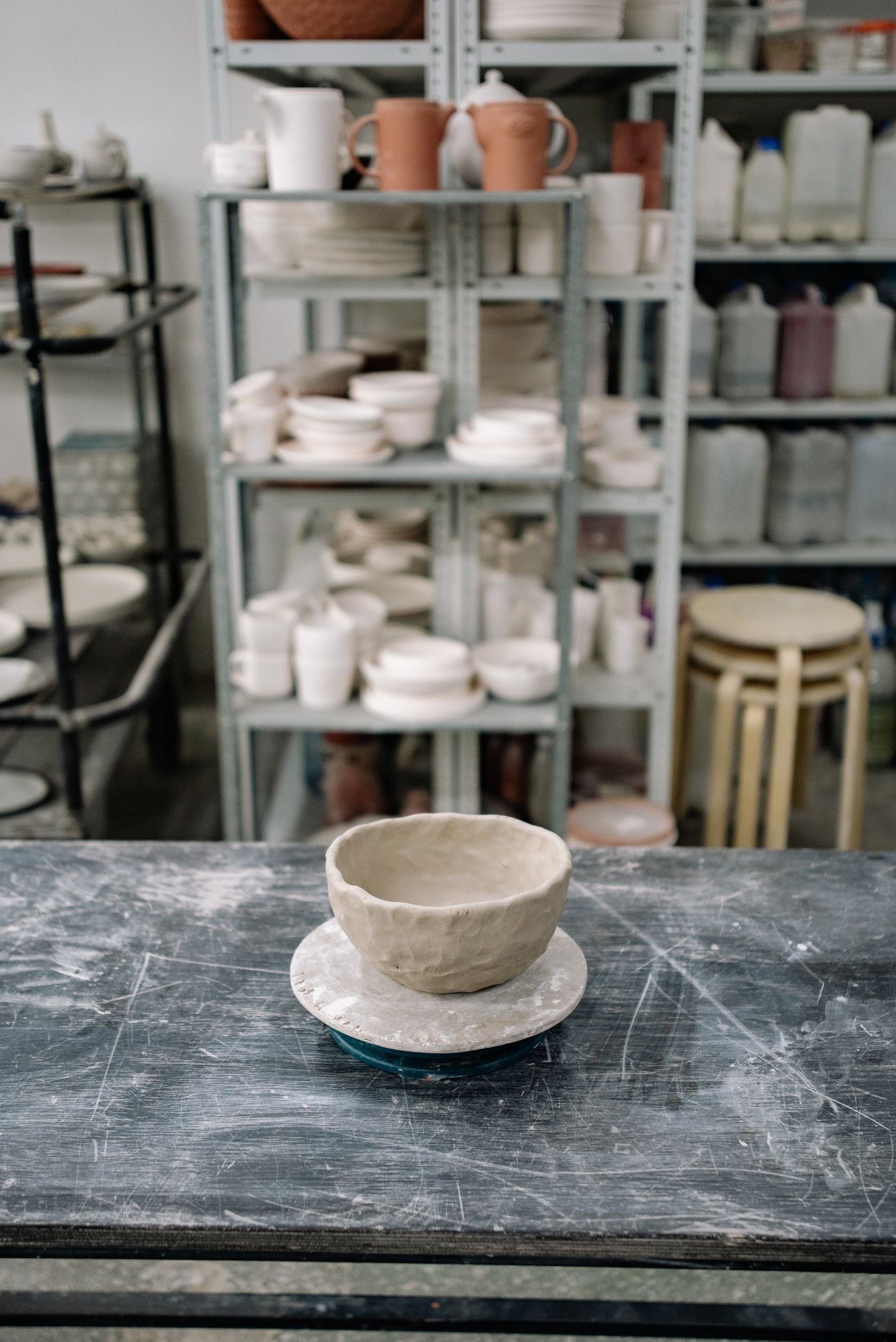
Begin by identifying what makes the object specific: a stitched edge, a carved joint, an uneven glaze or the relationship between handle and body. Choose a setting that helps explain that feature. A wooden bowl on a workbench suggests making; the same bowl on a dining table suggests use. Decide which story you want before adding props.
Ask the maker or owner before moving the object, and use clean, stable surfaces appropriate for its finish. Do not place a delicate piece among tools simply because the arrangement looks convincing. The photograph should not create damage or imply a manufacturing process that did not occur.
Give context a limited role
Include one or two relevant surroundings rather than filling the frame with every available material. A small amount of wood shavings may explain carving, while a crowded pile can hide the bowl's outline. Leave a clear boundary around the part you want the viewer to inspect. Move the background object instead of the main subject only when you have permission and the arrangement remains truthful.
Use light that reveals the material. Side light can describe relief in wood or fabric, while a broad reflected source may make glaze easier to read. Watch for a highlight crossing the exact detail you need to show. Adjust the light or viewpoint before increasing contrast in the camera or relying on later editing.
Make one image of the whole object in context and one closer view of the distinctive feature. Keep the relationship between them recognisable through colour, material or an overlapping detail. If the close view is so abstract that the object becomes impossible to identify, it may work as a separate study but contribute less to this pair.
Check that the photograph represents the object's proportions fairly. A very close wide-angle view can exaggerate the nearest part, which may be expressive but unsuitable for a straightforward description. Keep captions factual about the material and process, using information from the maker when available. Do not infer a technique, place of origin or age from appearance alone. The context should add evidence, not manufacture a story.