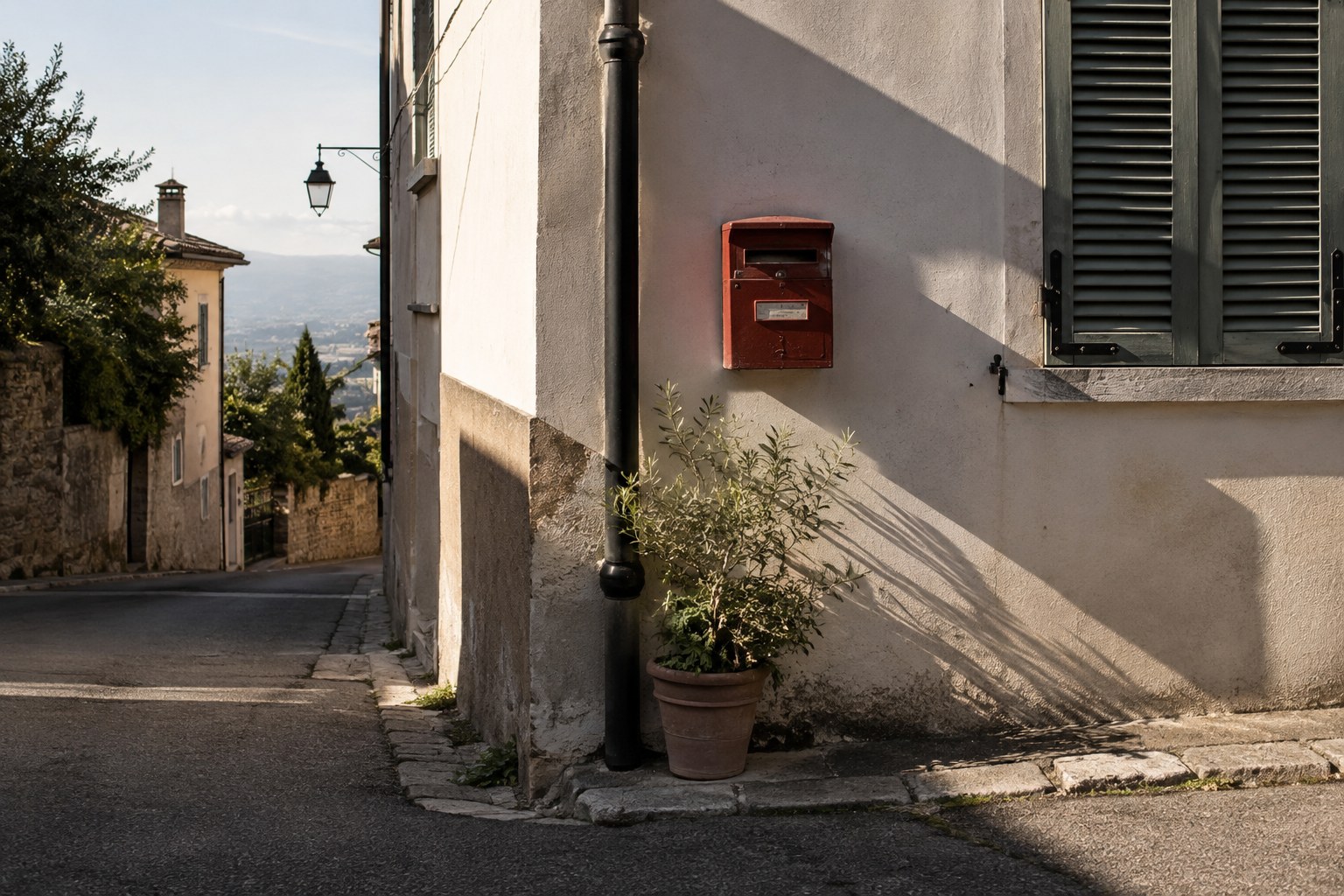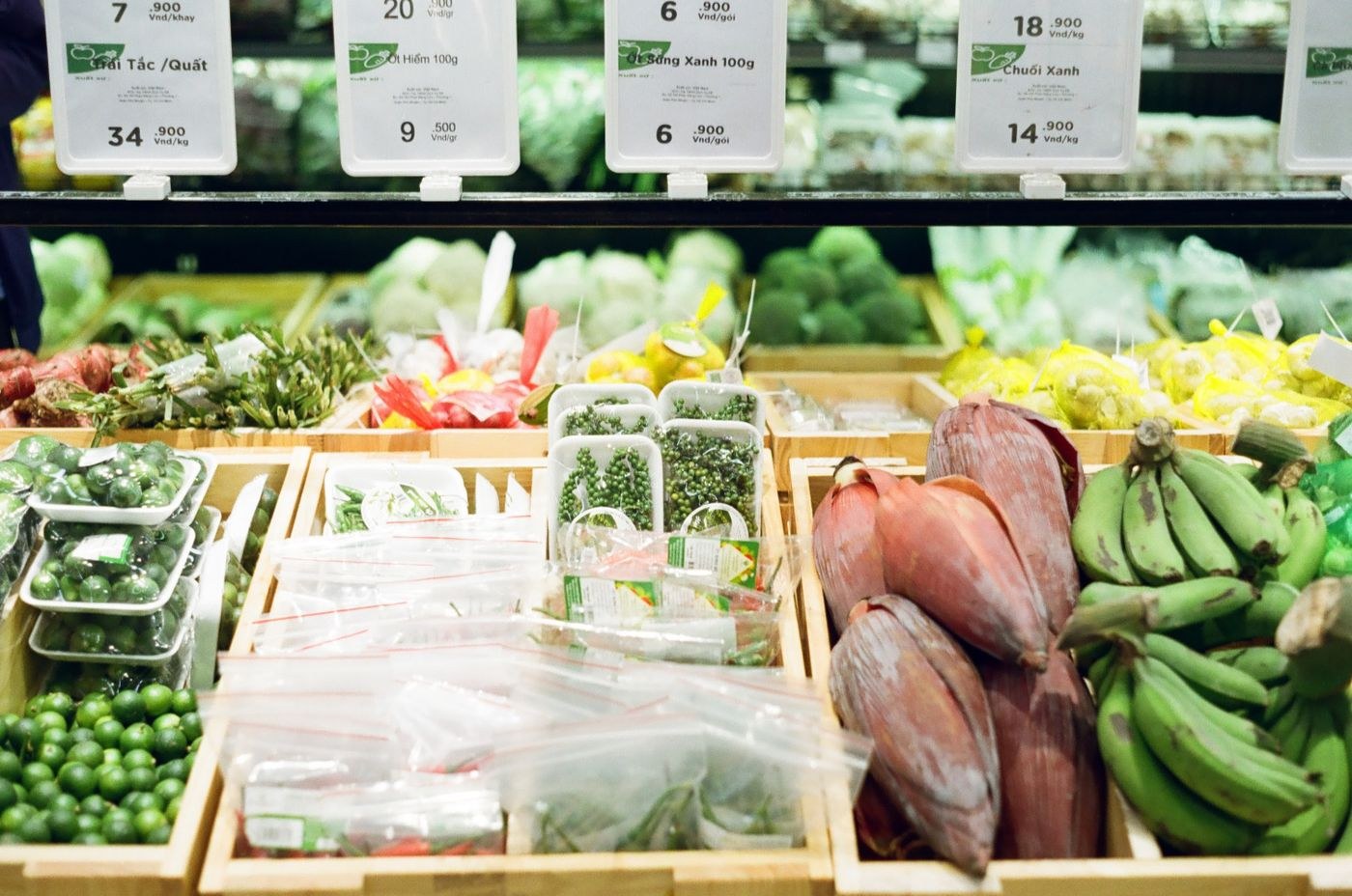
Begin with the market's structure: rows of stalls, an aisle, an awning or the way goods are displayed. A contextual photograph gives later details a place to belong. Keep clear of customers and ask before photographing inside a stall or making a close study of someone's work. A seller may be happy for you to photograph produce but prefer not to have customers or prices included.
Look for evidence of use rather than only abundance. A folded paper bag beside fruit, a balance scale or a stack of empty crates can suggest how the market operates. Select an arrangement that is already there instead of moving goods without permission. If an object has been arranged specifically for your photograph, avoid presenting the result as an untouched documentary moment.
Work from broad shapes to small details
Make one frame of repeated forms, such as baskets or rows of vegetables, and another of a single contrasting item. Side light may reveal texture on bread or woven material; overhead shade may keep colourful produce easier to expose. Watch for bright gaps beyond the awning that pull attention away from the display. A small change in height can remove them.
At close distance, depth of field can become narrow. Decide which label, edge or surface must be sharp, and place the focus there. Do not assume that a broad display will all be detailed at a wide aperture. If several rows matter, use a suitable aperture and check the result, while keeping the shutter fast enough for movement around the stall.
Hands can connect an object to an activity when the person is comfortable being photographed. Wait for a clear action, such as wrapping or weighing, rather than collecting random partial gestures. Leave enough space around the action to explain it. A hand cut off at an awkward point may feel accidental even when the object itself is well framed.
Edit the visit into a short sequence: place, arrangement, detail and activity if you have them. Remove repeated views that convey the same information. The strongest set may contain only a few photographs, each adding something distinct about materials, scale or work. Keep captions descriptive and avoid inventing a seller's story from the appearance of a stall.