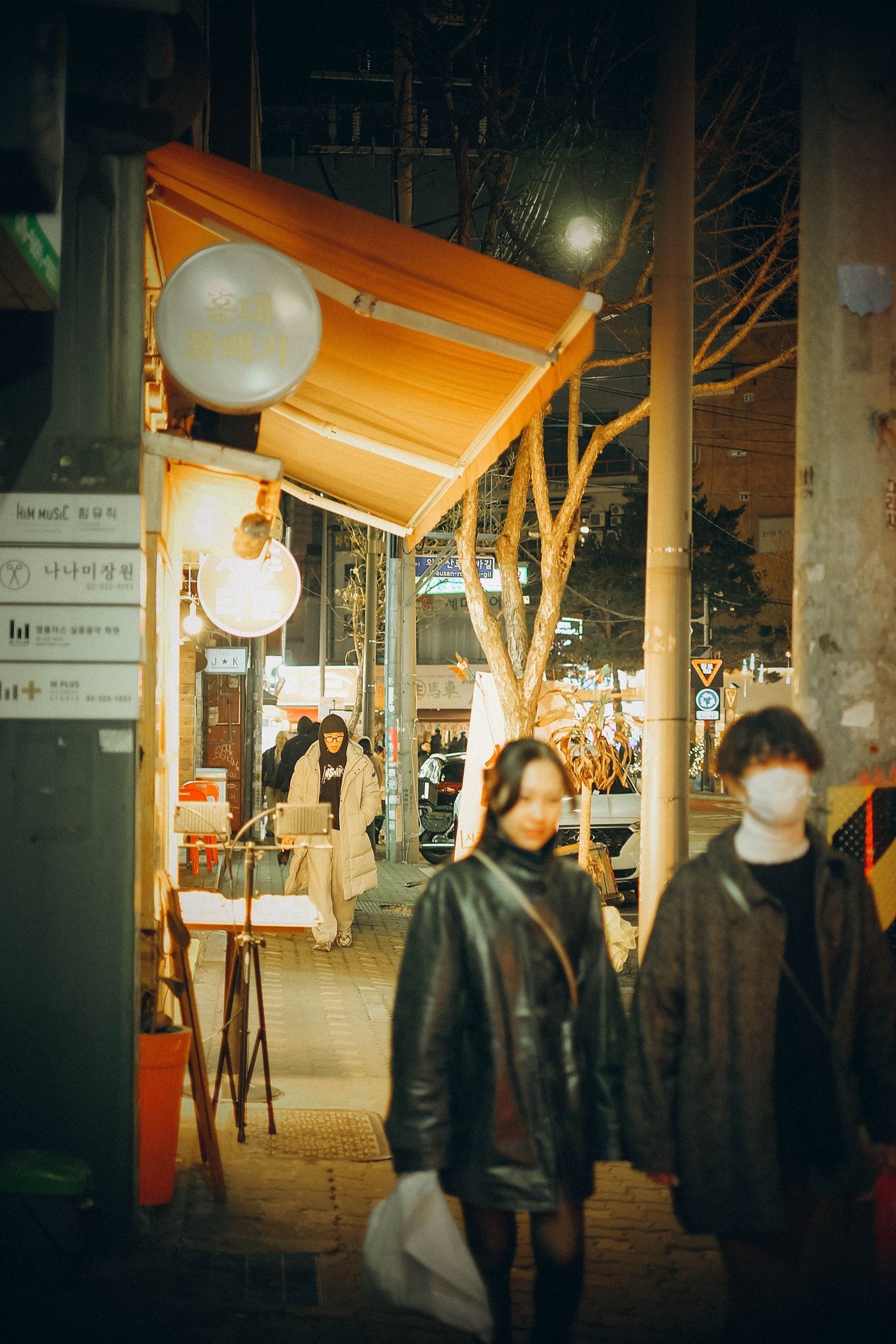
A lit shopfront, a streetlamp or reflected light from a pale wall can provide a usable subject area. Start there instead of trying to expose every dark corner. Watch how people or objects change as they enter the light. The strongest position may be beside the source rather than directly beneath it, where shadows can fall sharply downward.
Decide whether movement should be sharp. For a walking person, a long exposure that works for the architecture may be unsuitable. Raise ISO or open the aperture as needed, accepting the trade-offs in noise and depth of field. Stabilisation can reduce camera movement but cannot stop the subject from moving during the exposure.
Protect meaningful highlights
Bright signs can clip while the street remains dark. Check the important parts of the sign and any illuminated face, then decide what must retain detail. A tiny lamp core may remain white without harming the photograph. Reducing exposure until every light source contains detail can leave the actual subject unnecessarily dark.
Mixed lighting may create different colours across the same scene. Choose a white balance that makes the main subject plausible and allow some environmental colour to remain. A single global adjustment cannot neutralise several different light sources simultaneously. If the colour conflict overwhelms the subject, change the position or frame rather than relying on extreme correction afterward.
Autofocus may struggle with dark, low-contrast areas. Place the focus point on a clear edge at the subject distance and verify the result. Avoid focusing on a bright background sign when the nearby person is the important element. If using manual focus, check it after any meaningful change in subject distance.
Take a test image and inspect both detail and overall mood. A night photograph does not need to resemble daylight. Keep enough darkness to preserve the location's lighting pattern, while making the chosen subject readable. Stay aware of your surroundings, work from secure positions and avoid leaving bags or supports in walkways. Before moving on, check that the photograph is sharp where it matters rather than assuming a bright rear screen proves success.