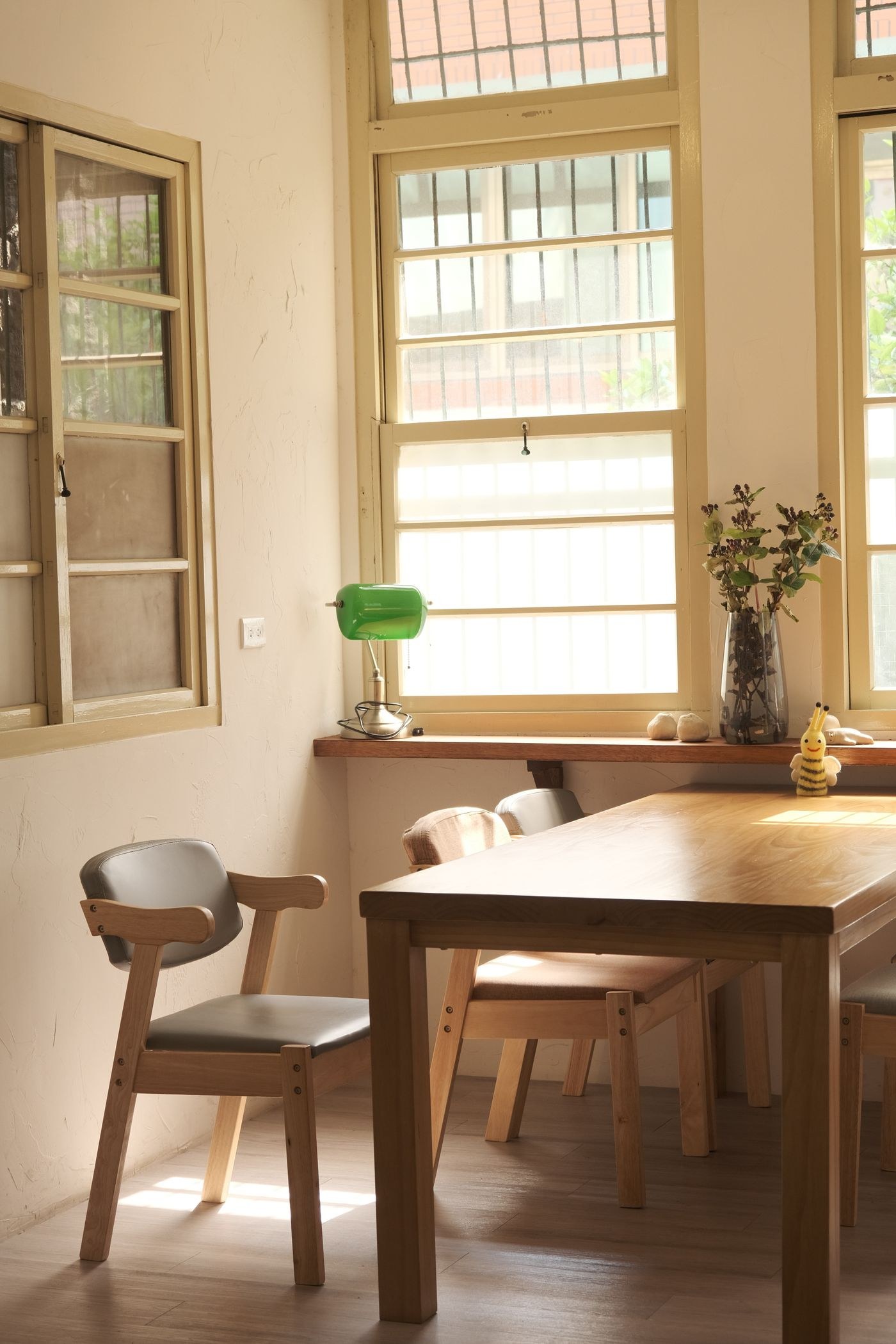
A room can look balanced to your eyes while a photograph shows dark furniture and a blank white window. Your vision adapts as you look around, whereas the camera records one exposure at a time. Before choosing a technical solution, decide whether the outside view is essential. A bright window can be acceptable when it functions mainly as the source of light, but not when the view is part of the room's character.
Arrange the room honestly before photographing it. Remove temporary clutter that distracts from the intended subject, but do not use the photograph to imply features that are not present. Open curtains or blinds to a position that creates a coherent pattern. Check mirrors, glass doors and reflective appliances for the camera and for bright fragments that complicate the composition.
Find a more manageable light balance
Try a different time of day if the window receives direct sun while the room stays shaded. Softer outdoor light can reduce the contrast and make one exposure more usable. Existing interior lights may help reveal surfaces, but they can introduce mixed colour. Decide whether their warmth belongs in the picture and compare a frame with them off rather than assuming more light is always better.
Support the camera, choose an aperture for the depth of the room and make a reference exposure. Keep vertical lines under control by avoiding unnecessary upward tilt. A wide lens may fit more of the room but can stretch objects near the edges. Move furniture out of an extreme corner of the frame only if that reflects a reasonable real arrangement; otherwise choose a less exaggerated view.
Inspect both the important interior detail and the window. If one frame cannot hold both, make a bracketed sequence without changing the camera position or aperture. Vary shutter speed so that one frame records the window and another records the room. Keep doors, curtains and people still between frames where possible. Moving leaves outside can still complicate a later merge.
A useful difficult case is a room with a window partly hidden by a plant. Fine leaves cross the bright frame, so a heavy exposure blend can produce halos. Before editing, try moving the plant a little within a plausible arrangement or choosing an angle that separates it from the window. Simplifying that overlap at capture can save more work than adding extra bracket frames.
For a sequence of rooms, keep camera height and colour treatment reasonably consistent without forcing identical exposure values. Each room has different light. Take a reference in each space and check verticals before moving on. Consistency should help the viewer understand the property, not make a shaded bedroom and sunlit kitchen look artificially identical.
If people are included to show use or scale, make a separate exposure decision for their movement. A long room exposure may blur them even on a tripod. Choose a shorter shutter, accept an intentional trace of movement or photograph the room without people. Do not merge a moving figure carelessly across several exposures.
Keep a merged result coherent
When combining exposures, match edges carefully around window frames and fine curtains. Halos or dark borders make the adjustment visible. The exterior should not become darker than the room in a way that contradicts the light source. Retaining every leaf outside is less important than maintaining a believable relationship between inside and outside.
Compare the merged version with a single-frame reference. Look for changes in colour, shadow direction and local contrast. A room should not have equally bright corners if the original light clearly falls away from the window. Lift only the details needed to describe the space, preserving enough shadow to show depth.
Check the final image at its intended display size. Tiny merging errors may disappear, but leaning walls, overly stretched furniture and an unnaturally dark window remain obvious. If the photograph will represent a property or rental, keep editing focused on presentation rather than altering permanent features or views. A clear, plausible room image is more useful than one that appears technically complete but spatially misleading.