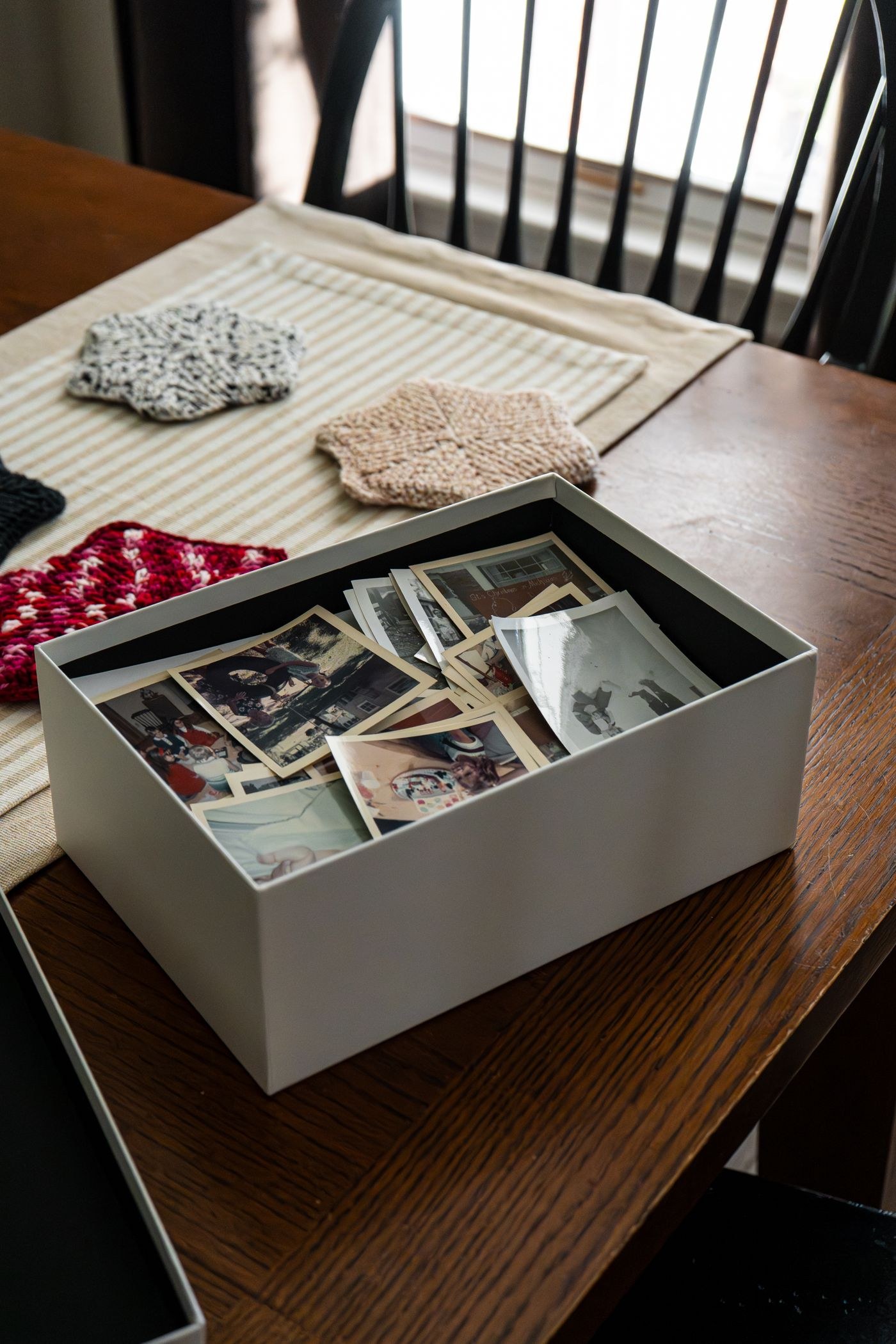
A box of loose prints can become difficult to use even when the photographs are undamaged. Different sizes slide between one another, duplicate copies lose their purpose and an unidentified portrait becomes separated from the note that explained it. Organisation should reduce handling as well as improve retrieval.
Start on a clean, dry surface with only a manageable group of prints. Keep existing envelopes and notes beside the images they accompanied until their relationship has been recorded. An old envelope may contain a date or place that is absent from the photographs themselves. Do not discard it simply because it is not suitable as the final storage enclosure.
Use enclosures intended for photographic materials and check the supplier's specifications, including photographic safety testing. Handle prints by their edges or housing, avoid attaching adhesive notes to the image and keep the collection away from damp, unstable storage conditions. Different historic photographic processes can require different care; fragile or damaged material deserves advice specific to it rather than an improvised cleaning treatment.
Identify the group before the individual
Choose a grouping that answers how you are likely to look for the pictures. A family collection might use events and approximate dates; a working photographer might use projects. Keep uncertain dates visibly uncertain. “Summer, probably 1988” is more honest and more useful than a precise date invented to make the index look complete.
Give each envelope or folder a short identifier and record its contents in a simple list. The list can include the group name, approximate date range, number of prints and known related digital files. If several photographs are almost identical, distinguish them by an observable feature rather than relying only on their order in a stack.
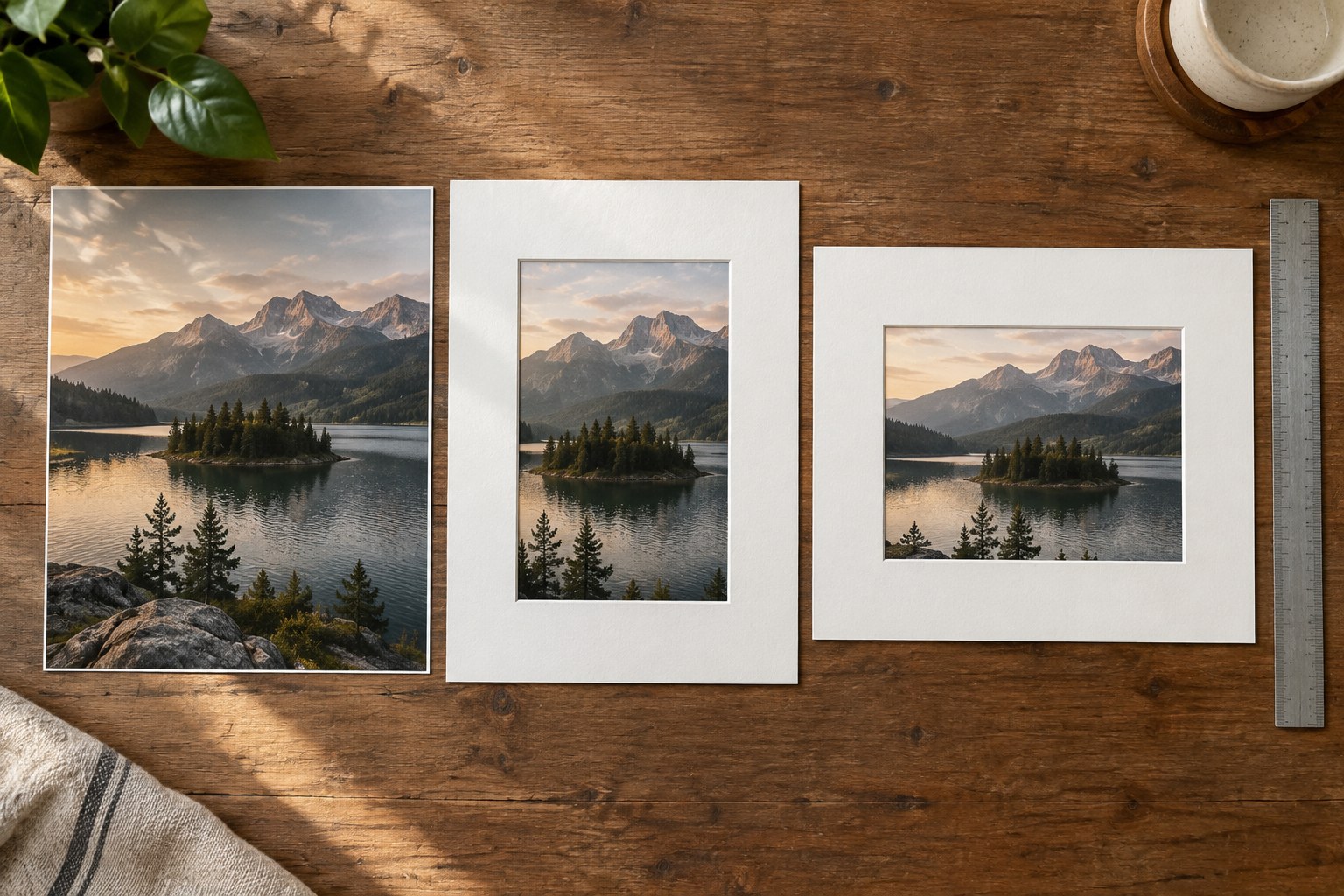
Do not force different print sizes into an arrangement that bends or crowds them. Related items can live in separate suitable housings while the index keeps them connected. A note such as “large group portrait stored in flat box B” is preferable to folding an oversized print so it stays with the smaller copies.
After a viewing session, return the photographs to their recorded locations before starting another group. If a print leaves for framing or scanning, put a location note in its place. This small habit prevents an organised box from becoming a source of unexplained gaps. Review the index when the collection changes, not according to an elaborate schedule that makes the system harder to maintain than the photographs themselves.