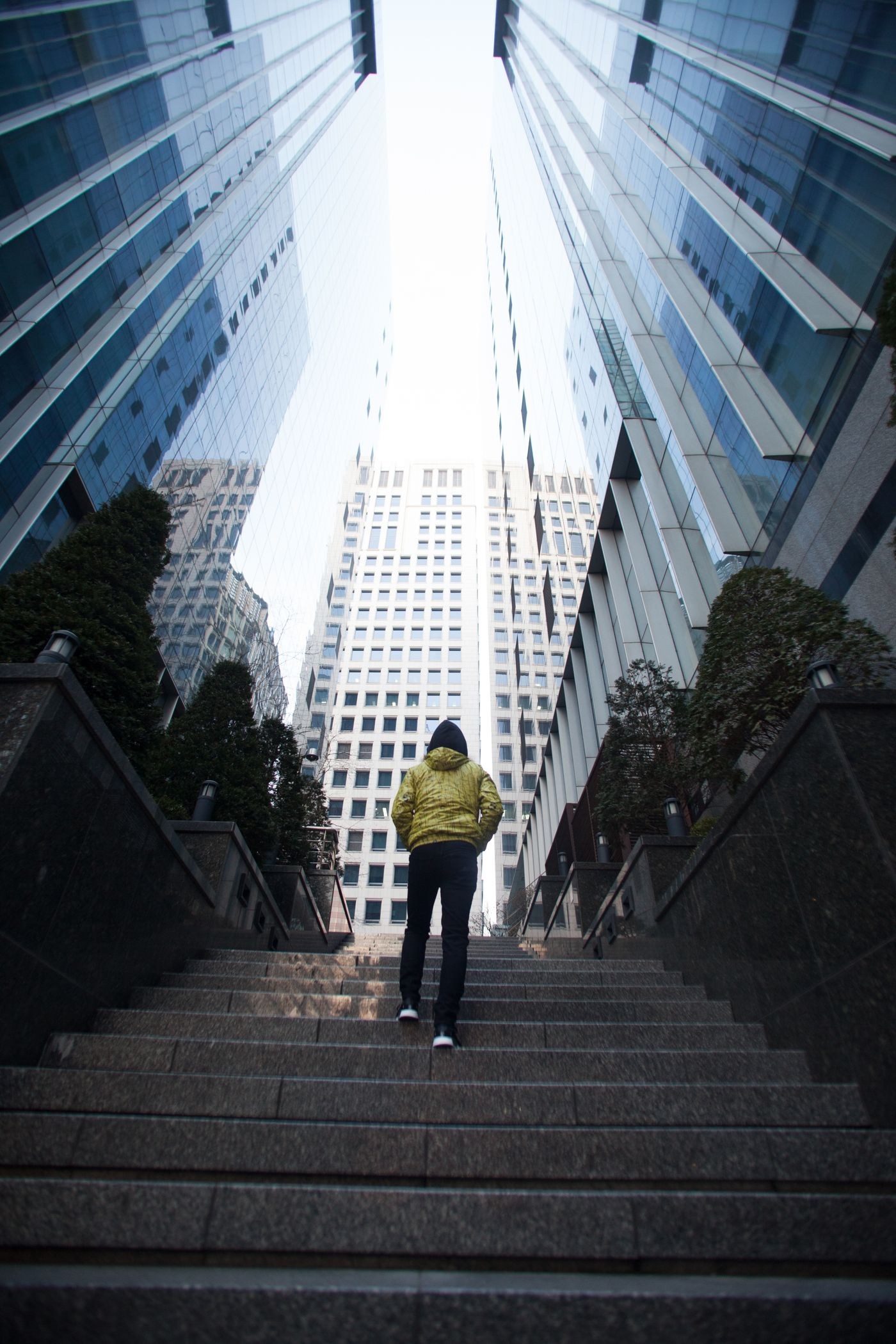
A low viewpoint can make a small subject feel larger and separate it from a busy background. It can also hide important parts behind grass, pavement edges or furniture. The useful change is not simply that the camera is near the ground; it is the new relationship between the subject, the foreground and whatever appears behind it.
Before crouching, choose what must remain visible. For a person, that may be the face and the shape of the legs. For a small object, it may be the top surface or a label. Lower the camera gradually and watch when those details disappear. Stop at the height that improves the picture rather than automatically going as low as possible.
Check the background immediately behind the subject. A low angle may replace clutter with sky, but it can also put a bright window or lamp behind a head. Move sideways to separate these forms. If the subject becomes a silhouette against the new background, decide whether that is intentional or whether you need a different angle or exposure.
A nearby foreground can become disproportionately large with a wide lens. Inspect the bottom corners for distorted shoes, stones or table legs that pull attention away. Step back or use a longer focal length if the exaggeration is not useful. Perspective follows camera position, so zooming alone does not undo the relationship created by being very close.
Use a tilting screen when available so that you can compose without an awkward neck position. Keep the camera stable and avoid resting it directly on wet or gritty ground. A small support can help, but make sure it cannot tip and that it does not obstruct public paths. Check the lens for dust or droplets after working close to the surface.
Focus on the intended subject, not the nearest strip of grass. A smaller focus area or a clear touch-focus selection can help when the foreground occupies much of the frame. Review the important detail enlarged. A dramatic angle does not compensate for a face or label that is too soft to read.
Make a comparison at ordinary eye level before moving on. The lower view should reveal something: scale, shape, a cleaner background or a more direct relationship with a small subject. If it only creates awkward overlaps and missing details, the higher viewpoint may be the stronger photograph.