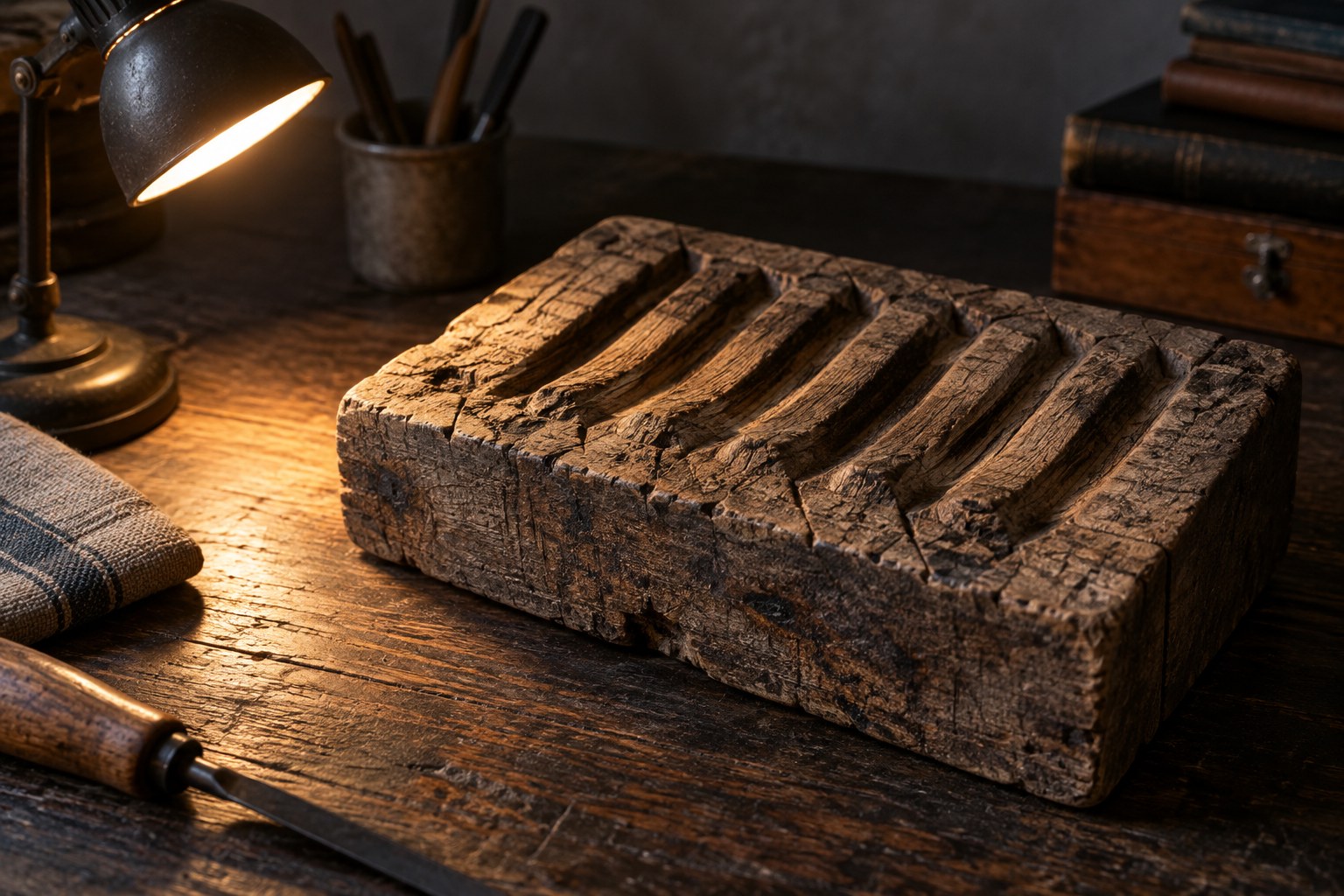
Texture becomes visible when small raised areas and recesses receive different amounts of light. A light close to the camera axis can flatten those differences, while light skimming across the surface can exaggerate them. Begin with a textured object such as folded linen, rough pottery or a piece of wood, and decide whether you want a subtle or strongly tactile result.
Keep the camera and object fixed while moving one light. If you use a window, rotate the object instead. Make a frontal-light reference, then bring the light around to the side in stages. Watch the direction of grain, grooves or weave. Light across the texture often reveals it differently from light travelling along it.
The apparent size of the light source affects shadow transitions. A small source can create crisp miniature shadows, while a larger source generally produces gentler ones. Distance matters too: moving a light changes both its apparent size and the brightness across the object. Adjust exposure when needed so that a darker frame is not mistaken for stronger texture merely because it looks more contrasty.
Inspect the brightest ridges. A glossy patch on wood or a glazed ceramic surface may reflect the source directly and lose detail. Change the angle before simply reducing the whole exposure. The useful position reveals the relief while keeping important highlights within a workable range. A matte surface and a polished one may need very different arrangements.
Choose focus and aperture for the surface you are describing. If the object lies at a steep angle to the camera, part of the texture may fall outside the sharp region. Align the camera more nearly with the important plane or accept a deliberate progression into softness. Strong directional light cannot make an out-of-focus texture sharp.
Keep the background simple enough that the surface remains the subject. A dark shadow behind the object may help separate it, but a hard line across the frame can compete with the texture. Move the object away from the background or change the framing if necessary. Do not add more lights until you understand what the first one is doing.
Compare the series in colour and, if useful, in a neutral monochrome preview. The monochrome view can reveal whether the texture depends on actual tonal relief or mostly on colour variation. Return to the version that matches the material's character. A softly worn cloth does not need the same aggressive lighting as a deeply carved wooden surface.