Choose a familiar prime lens and give it one clear job for the day: people within their surroundings, small architectural details, or relationships between objects on a street. The exercise works better when the subject fits the lens reasonably well. A very long lens in a narrow room mainly teaches you that the room is narrow. It does not reveal much about ordinary composition.
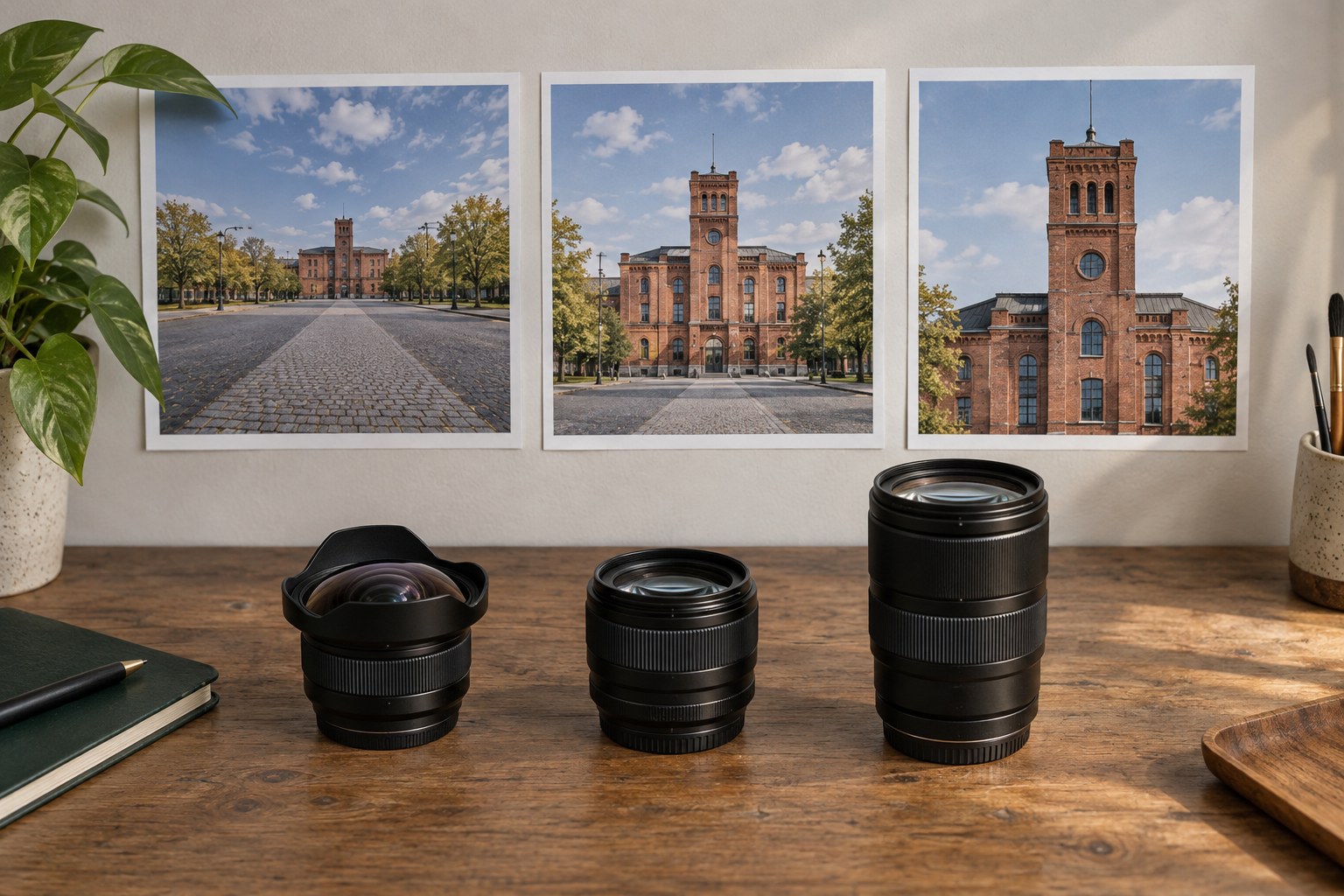
Before leaving, make three photographs from the same position: something close, something across the room and the whole room. Notice what fits without changing your position. That quick calibration helps you anticipate frames instead of raising the camera at every subject and then discovering that an important part is missing.
Moving changes more than framing
Walking closer enlarges the subject, but it also changes the relationship between near and distant objects. A face may become more prominent against a building; a foreground sign may hide a doorway. This is why moving your feet is not an exact substitute for changing focal length from one position. Use the difference deliberately. Take one photograph where the background explains the subject and another where distance separates them.
Avoid treating the widest aperture as the lens's default setting. A bright prime can make shallow focus available, but a scene with several relevant layers may need more depth. Check a foreground edge and a background detail after changing aperture. If the subject is moving, preserve a suitable shutter speed rather than accepting motion blur simply to retain a particular ISO value.
At a location where the whole subject will not fit, look for a meaningful part. A shop window and its reflection can describe a street without showing the complete façade. This is a selection exercise, not an obligation to crop every subject into fragments. If the missing context makes the photograph confusing, leave that frame and find another viewpoint or subject.
Judge the day by a small selection
Choose six photographs that do different things with the same lens. Include a near subject, a layered scene and an image with deliberate empty space if the day's subjects support them. Note which pictures required awkward positions and which appeared naturally. That record tells you more about the lens's suitability for your work than counting how often you wished for a zoom. Keep a separate note of genuinely missed photographs so the exercise does not become an argument that one lens can do everything.